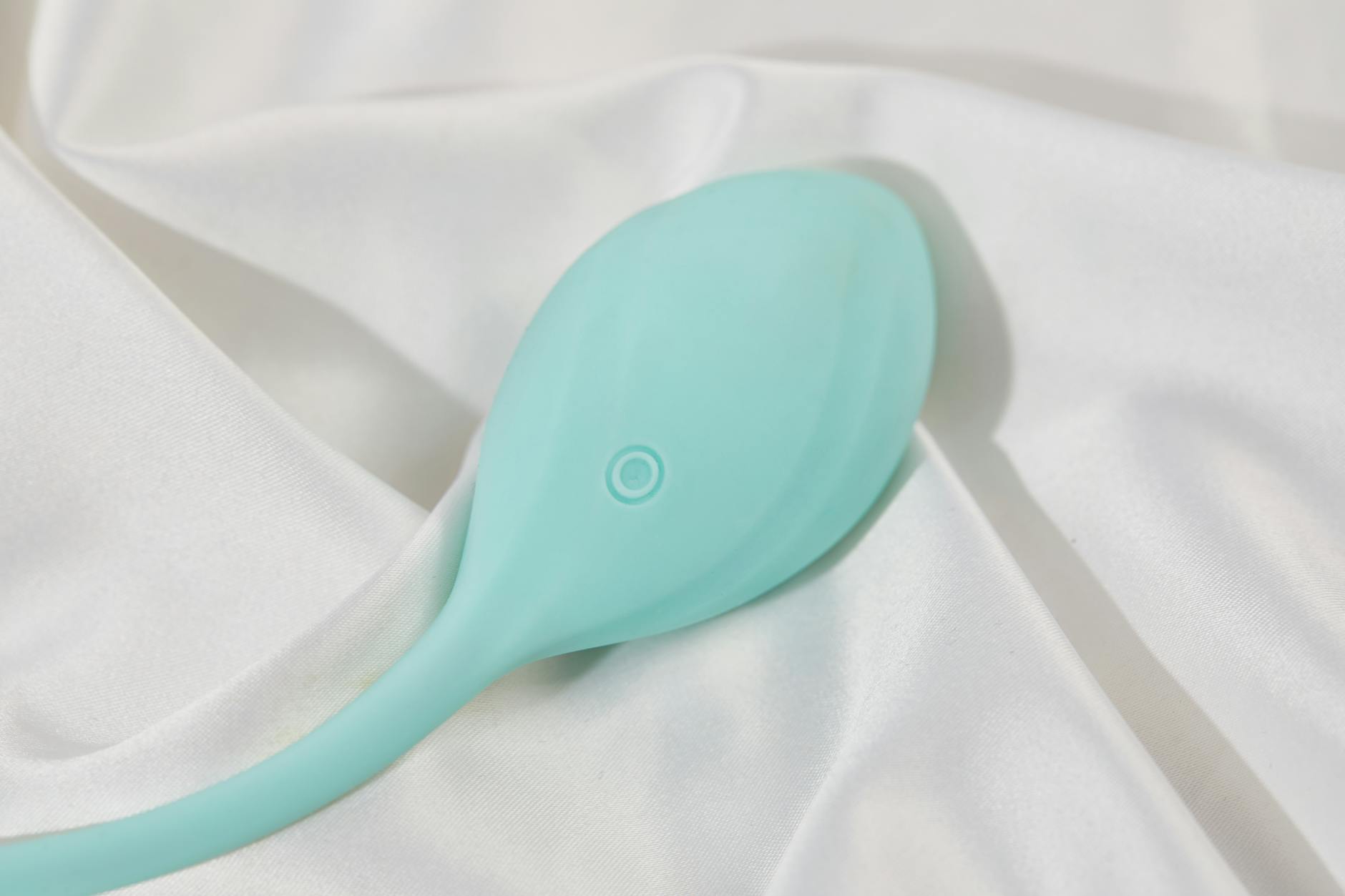
Here's the thing about your cycle and pleasure
Your clitoris isn't static. It changes texture, sensitivity, and blood flow every seven days, which means what felt amazing on Tuesday might feel like too much on Saturday. Most people have no idea this is happening. They assume their body is broken, their partner isn't trying hard enough, or they're just having an off day. None of that is true. You're just cycling.
This is where lemon vibrators become genuinely useful. Because their suction-based design adapts better to fluctuating sensation than other toys do, they work across the entire month without needing to switch tools. Let me explain why this matters and how to use it.
What hormones actually do to your clitoris
Estrogen peaks around ovulation (roughly day 12-14 of a 28-day cycle). When estrogen is high, clitoral tissue swells, blood vessels dilate, and sensitivity increases. Your clitoris becomes more pronounced, more easily aroused, and more responsive to stimulation. This is the sweet spot where you can handle faster patterns, higher intensity, and longer sessions without fatigue.
Before your period (the luteal phase), estrogen drops and progesterone rises. Your clitoris becomes less engorged. Tissue thins slightly. Blood flow decreases. What this means in practice: the same vibration setting that felt perfect last week now feels sharp, overstimulating, or even uncomfortable. Your body isn't saying no to pleasure. It's asking for something different.
The follicular phase (after your period, before ovulation) sits in the middle. Estrogen is climbing but hasn't peaked yet. Most people describe this as a gradual wake-up period. Sensitivity increases progressively. You're rebuilding toward peak arousal.
Why lemon clitoral vibrators adapt better than standard vibrators
A traditional vibrator works one way: it vibrates. The intensity might adjust, the pattern might change, but the stimulation approach stays the same. The toy doesn't know your hormones have shifted, so it can't adjust.
A lemon sucker, like the ones Hello Nancy makes, uses suction. This changes the conversation. Suction stimulates differently than vibration. It's broader, less pointed, and creates a gentle pull rather than direct percussion. Across your cycle, this means:
During high-estrogen phases (follicular, ovulation), you can use higher suction levels and faster patterns because the broader stimulation feels intense without being harsh.
During low-estrogen phases (luteal), you can drop to lower suction settings and slower patterns, and the toy still feels effective because the suction mechanism engages your clitoris without that penetrating vibration feeling.
You're not switching toys. You're just adjusting one variable (suction level) instead of abandoning the toy entirely.
Mapping your cycle to intensity settings
If you own a lemon vibrator with multiple patterns and intensity levels, here's how to work with your actual body.
Days 1-5 (Menstruation). Your hormones are at their lowest point. Sensitivity is reduced, but many people find that gentle stimulation helps with cramps and mood. Use settings 1-2. Slower patterns feel better than rapid ones. If you're not interested in pleasure right now, that's completely valid. Your body doesn't owe you arousal during your period.
Days 6-12 (Follicular Phase). Estrogen is climbing. Your clitoris is waking up. Sensitivity increases each day. Start at setting 2-3 and gradually increase as the week progresses. By day 12, you can usually handle 4-5 comfortably. Faster patterns start feeling good again.
Days 13-15 (Ovulation). Peak estrogen. Your clitoris is maximally engorged and sensitive. This is when you can explore higher intensity. Settings 5-7, faster patterns, longer sessions. Your body can handle sustained stimulation without fatigue. This is also when many people want sex or partnered play most.
Days 16-20 (Early Luteal). Progesterone starts rising as estrogen drops. Sensitivity begins declining. You're still capable of strong sensation, but intensity 4-5 starts feeling better than 6-7. Stick with moderate settings and balanced patterns. Your body is still responsive but less hungry for maximum intensity.
Days 21-28 (Late Luteal/PMS). Progesterone peaks, estrogen drops further. Your clitoris is less engorged. Settings 1-3 feel right. Some people find that no toy feels good this week. That's not a sign something is wrong. Your body is honestly telling you what it wants. Listen to it. If you do want pleasure, slower patterns and lower suction prevent that scratched feeling that can come from overstimulation during this phase.
The emotional piece nobody talks about
Hormones don't just change physical sensation. They change desire, energy, and what kind of pleasure appeals to you.
During ovulation, many people want external validation, adventure, intensity. You feel confident. You want your partner to want you. Pleasure is about sensation and connection simultaneously.
During the luteal phase, many people want safety, control, comfort. You might want to pleasure yourself alone. You might want slow, rhythmic touch. You might not want anything at all. This isn't low libido. This is your body asking for a different kind of engagement.
The best tools are the ones that let you follow what your body actually wants instead of forcing it into one shape all month. A lemon vibrator's adjustability means you're not choosing between "too intense" or "not enough." You're choosing what your body is asking for that specific day.
Common mistakes that mess with the pattern
Using the same intensity all month. Your body changes. Your toy approach should too.
Assuming pain or discomfort means the toy doesn't work. If something hurts during the luteal phase, you're likely using too high a setting. Lower the intensity, not the toy.
Ignoring emotional context. You might want nothing at all some weeks. That's not a failure. That's information. Honor it.
Not syncing with your partner, if you have one. If you're partnered, your cycle affects both of you. Let them know that your needs will shift. That's not a personal rejection. That's biology.
When to track and when to just feel
Tracking your cycle helps you predict patterns. Knowing that you always want more intensity around day 13 means you can prepare. But don't let tracking become rigid. Some months your cycle is 26 days. Some months it's 30. Some months stress shifts everything.
The real skill is learning to read your body in real time. How does this feel today. Do I want more or less. Is this sharp or sensual. Does this feel good or obligatory. A lemon clitoral vibrator gives you the adjustability to answer those questions without guilt or compromise.
FAQ
Can birth control change how vibrators feel?
Yes, significantly. Hormonal birth control suppresses the hormonal fluctuations we've been talking about. If you're on hormonal contraception, your cycle is flattened. You might not experience the same week-to-week sensitivity changes. This doesn't mean vibrators don't work. It means the pattern is different. You might find one consistent intensity setting works all month, which is genuinely simpler for some people. If you switch to or from hormonal contraception, give yourself a few cycles to learn your new baseline.
What if my cycle is irregular?
Irregular cycles make pattern prediction harder but not impossible. Instead of tracking days, track sensation. Roughly when do I feel most sensitive. Roughly when does intensity feel too much. Build your own personal pattern. A lemon vibrator's adjustability makes this easier than with a single-intensity toy.
Does everyone experience these changes?
No. Some people notice zero difference across their cycle. Some notice enormous difference. Both are completely normal. The information in this article is what most people report, but your body might work differently. That's fine. Use a lemon vibrator as a tool that lets you explore what actually feels good, regardless of what the average person experiences.
Can I use a clitoral vibrator during my period?
Yes. Some people find gentle stimulation helps with cramps. Some find it emotionally grounding. Some have zero interest. All are valid. If you do use one, keep intensity low. Your clitoris is more sensitive to irritation during menstruation. If anything feels uncomfortable, stop.
Why does the same setting sometimes feel numb and sometimes feel intense?
Your hormones. Setting 3 on day 14 engages a fully engorged, highly vascular clitoris. Setting 3 on day 25 engages a less engorged one. Same tool, different tissue state, completely different sensation. This is why adjustability matters.
How do I talk to my partner about cycle-related pleasure changes?
Directly and early. "My body changes throughout my cycle, and so does what feels good. Some weeks I want intensity. Some weeks I want slowness. This isn't about you. It's about where I am that day." A partner worth having will adapt. If they can't, that's information about your relationship worth examining. Consider talking to a couples counselor if you need help navigating these conversations. How to Introduce Lemon Vibrators to Your Partner Without Awkwardness has more on making this easier.
The real point
Your body isn't broken when it wants something different each week. It's working exactly as it should. The pleasure tools that work best are the ones that adapt with you instead of forcing you to adapt to them. A lemon vibrator's adjustable suction means you can follow your actual desires across your entire month without switching devices, without compromise, and without guilt.
Your cycle is information, not an obstacle. Learn to read it. Your pleasure depends on it.
If you're curious about exploring this yourself and want to understand more about how different toys work for different bodies, How to Use Lemon Vibrators If You Have a Sensitive Clitoris digs deeper into responsive techniques. You deserve tools and knowledge that actually match your body. That's the whole point.