Okay so the thing about bringing up vibrators with a partner is that the actual conversation is never as awkward as the imaginary one you've been having in your head for three weeks.
I've worked with hundreds of couples through this exact moment. The pattern is always the same. One person rehearses the conversation obsessively, imagines catastrophic rejection, and then when it actually happens, the partner says something like "Oh thank god, I was wondering if you'd be into that" or "I've actually been thinking the same thing."
None of this is coincidence. People are often waiting for permission.
Why you're nervous (and why it's actually backwards)
Here's what's usually underneath the hesitation: you're worried that suggesting a vibrator means you're telling your partner they're not enough. That you're implying a problem. That you're criticizing them.
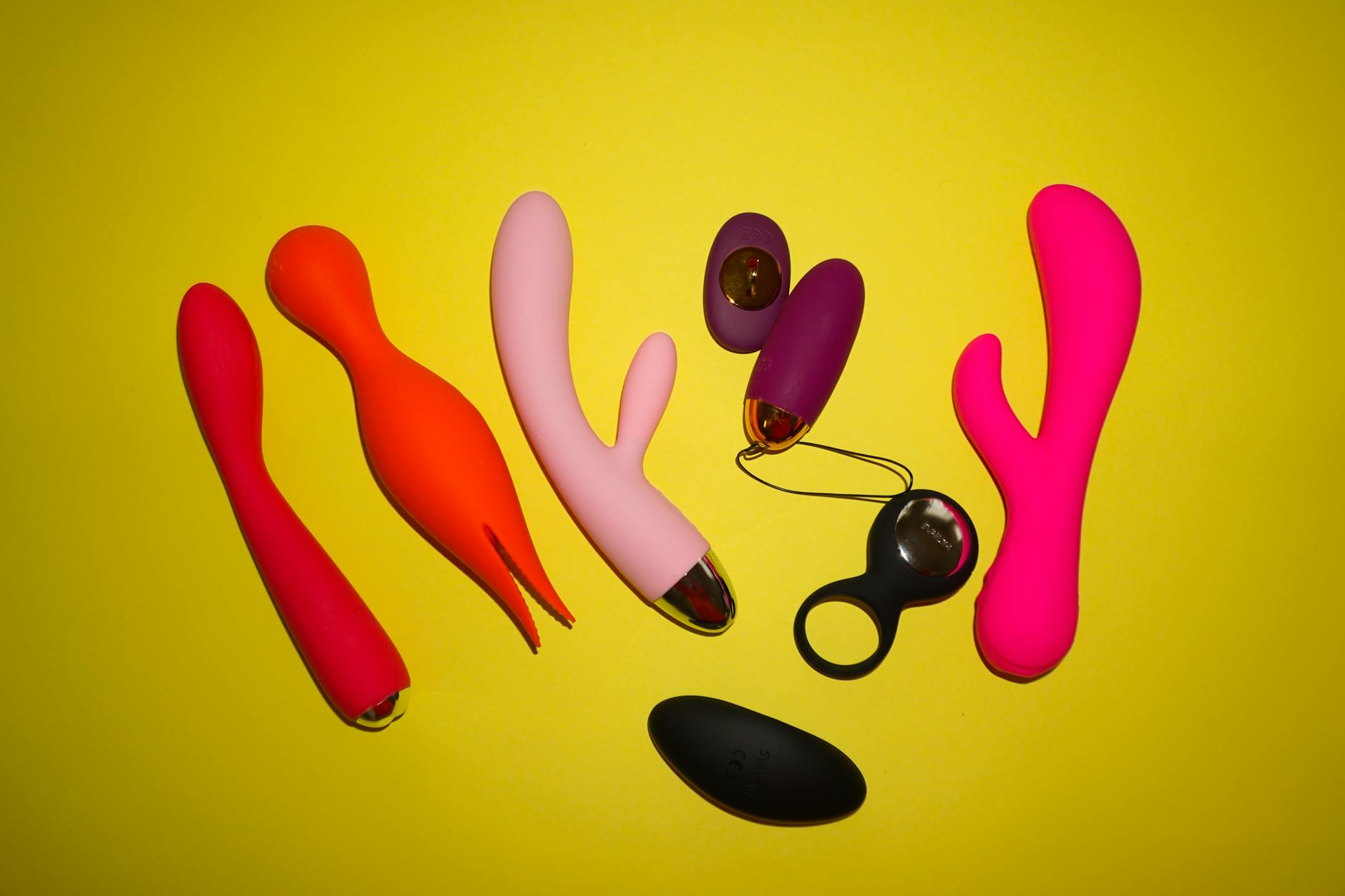
Instead, reframe it like this. A lemon vibrator or any clitoral vibrator isn't a critique of your partner's technique or desirability. It's an upgrade to the team's toolkit. Think of it the same way you might suggest better lighting, a different position, or trying something at a different time of day. It's not criticism. It's optimization.
The second thing that trips people up is shame. Pleasure tools have been taboo for so long that suggesting one can feel like you're asking for something weird or excessive. You're not. Clitoral vibrators are the most common pleasure device among partnered people who use them. Somewhere between 40 and 60 percent of women with partners use vibrators at some point. You're not the weird one. You're actually in the majority.
The setup matters more than the words
Timing and setting are doing 70 percent of the work here.
Do not have this conversation during sex, immediately after sex, or when either of you is tired, stressed, or distracted. This isn't a crisis moment that needs immediate resolution. Pick a time when you're both actually present and relaxed. That might be a Sunday morning coffee, a walk, or a moment when you're both genuinely at ease. The closer to "we're just talking" the better.
Avoid bringing it up as a favor you need. "Can we try using a vibrator?" lands differently than "I've been thinking about exploring this together." The second version includes your partner as an active participant, not someone doing you a service.
Also, skip the apology energy. Don't say "I'm sorry, but..." or "I hope this doesn't offend you..." That language signals shame, and it invites your partner to feel awkward too. Instead, straightforward and warm: "I wanted to talk about something that's been on my mind."
What to actually say
Here's a template you can adapt:
"I've been thinking about ways to add more to what we're already doing. I'm interested in exploring clitoral vibrators together. I think it could feel really good, and I'd like to try it with you. What do you think?"
That's it. Three sentences. You've explained the what (lemon vibrators or a specific clitoral vibrator like the Lem), the why (it feels good and you want to explore together), and you've invited their input.
If they seem hesitant, you might ask directly: "What's making you hesitant?" Listen. Sometimes partners worry about adequacy too. Sometimes they've had bad experiences with vibrators before. Sometimes they just need a second to adjust. None of those reactions mean no. They mean you're having a real conversation.
If they're into it, great. Move to the logistics section below.
The logistics conversation
Once you've got a yes, the next part is actually easier because it's just practical.
Talk about what kind of sensation you want. Are you more interested in fast vibration patterns, or something more directional? Do you want something compact or do you want more surface area? The Hello Nancy lemon vibrators, for example, come in different styles. The Lem is great if you want concentrated stimulation. But there are options depending on what appeals to you.
Talk about how you want to use it. Do you want it to be part of foreplay with your partner touching you while you use it? Do you want them to hold it while you guide? Do you want to use it during penetrative sex? All of these are different conversations, and they matter because what you're really deciding is how much your partner is physically involved.
Talk about where to get it. Online retailers like Hello Nancy sell clitoral vibrators discreetly. No awkward store visit if that's not your thing. Things arrive in unmarked packaging. Low stakes.
Talk about storage. Where do you feel comfortable keeping it? This seems small, but it matters for ongoing comfort.
What happens if they say no
Sometimes they will. That's worth taking seriously, but not catastrophizing over.
Asking why matters here. "No" is sometimes actually "I need more information" or "I'm nervous" or "I'm not sure." Sometimes it's "Not right now but maybe later." Sometimes it's "I don't want vibrators in our sex life," which is a real boundary, and it deserves respect.
If it's a hard boundary, you actually have a bigger conversation to have about whether this is a dealbreaker for you. That's between you two, and it might be worth working through with a couples therapist if it matters that much. But that's a different essay.
Most of the time, though, a no is negotiable. It might shift with time, information, or trust building.
After you've gotten one
The thing nobody talks about: the first time you actually use a clitoral vibrator with or around your partner can feel vulnerable. You might feel self-conscious. You might worry they're judging you. You might feel awkward about the noises or the intensity of your response.
Talk about that preemptively. "I might feel a little shy the first time, just so you know." That simple sentence removes the surprise and invites compassion.
The experience might not be incredible the first time. That's normal. Pleasure requires relaxation, and trying something new can create tension. Give it a few tries before deciding if it's working for you. Your brain needs time to adjust.
If your partner is involved, check in after. Not in a "rate the experience" way, but just "How did that feel for you?" keeps the conversation moving forward instead of creating silence around it.
Why this actually strengthens the relationship
I want to be direct about something. Couples who can talk openly about pleasure, desire, and sexual preferences have better sex lives. Full stop. They also have better communication overall because they've practiced being vulnerable about something that matters.
Introducing a lemon vibrator or any clitoral vibrator isn't a sign that something's wrong. It's a sign that you're willing to evolve together. You're saying "Our pleasure matters enough to me that I'm going to risk a awkward conversation to expand it." That's actually quite generous.
The conversation you're really having
Underneath all of this logistics stuff, you're having a deeper conversation. You're saying: I trust you enough to ask for what I want. I think we're a team. I want to feel good, and I want you to be part of that. That's not a small thing.
Most long-term partners are relieved when this conversation happens. They've been waiting for permission too. They want to know what you like. They want things to feel good for you.
Start the conversation. You've already done the hardest part by deciding you want to.
People also ask
How do you bring up vibrators in a new relationship versus a long-term one?
In a new relationship, timing is later but the conversation is actually simpler because there's less history. You can say "I'm interested in exploring this" without years of context loaded on top. In a long-term relationship, you might need to acknowledge the shift: "This is something I want to explore now, and I wanted to include you." Long-term partners sometimes need reassurance that this isn't about dissatisfaction but about growth. That's worth naming.
What if my partner wants to use a vibrator on themselves without me involved?
That's completely valid and worth respecting. Pleasure is not always a team sport, even in partnered sex. If that's your partner's boundary, work with it. The goal isn't to perform pleasure together at all times. It's to build trust around desire.
Can introducing a vibrator actually ruin a relationship?
Not by itself. What can damage things is the conversation going unexplored, shame building quietly, or someone feeling unheard about their boundaries. But the vibrator itself isn't the problem or the solution. It's just a tool. The relationship health lives in how you talk about it.
How long should you use a vibrator before having this conversation?
You don't have to have used one first. But if you're bringing one into partnered sex, it helps to know what you like on your own first. That way you're not discovering it all in front of your partner, which can add pressure. Spend time getting to know it solo. Then you'll have clearer language about what feels good.
What if my partner gets insecure about using a vibrator together?
Insecurity is real and worth taking seriously, but it's a separate conversation from the vibrator itself. You might say: "I love what you do, and I also want to explore this. They're not mutually exclusive." Sometimes your partner needs reassurance that they're still your primary source of pleasure and intimacy. Give that reassurance. Then separately, explore the new tool together. It's not either/or.
Should you buy the vibrator before or after the conversation?
After, honestly. Buying it before can feel controlling or presumptuous. The conversation comes first, and then you shop together or separately depending on what feels comfortable. If you want to know what options exist, you can do research, but the actual purchase should happen after alignment. That way it feels collaborative.
Start the conversation this week. You've already imagined it a thousand times. The real one will be easier than the imagined one, and whatever happens next is worth the small risk of asking.
If you're working through relationship questions beyond pleasure, consider connecting with a couples counselor who can help you build communication skills across the board. That foundation makes conversations like this one feel less high stakes.
Your pleasure matters. Your desires matter. And they're worth saying out loud to the person you're with.