Here's what trauma does to pleasure
Trauma doesn't just live in your mind. It lives in your nervous system, your pelvic floor, your reflex patterns. When someone has experienced sexual assault, intimate violence, or coercive touch, the body learns to brace. It learns that touch is unpredictable, that arousal might precede pain, that pleasure is unsafe.
That's not psychological. That's neurobiology. Your amygdala is literally more reactive, your parasympathetic nervous system slower to activate. Reconnecting with pleasure isn't about being "ready" or "wanting to try." It's about slowly teaching your body a new pattern.
Why control is the first step back
The most common thing I hear from trauma survivors exploring pleasure again is this: "I need to know what's coming." Not in a squeamish way. In a this-is-how-my-nervous-system-works way.
Lemon vibrators, particularly the lemon clitoral vibrator design, give you something traditional partnered sex rarely does: complete predictability and total command. You choose the intensity. You choose the rhythm. You choose the moment it stops. There's no negotiation, no mirroring someone else's arousal, no vulnerability to another person's timing or mood.
That control is not a crutch. It's a scaffold. Your brain needs to build a new association: touch equals something I initiated, something I can stop, something that feels good because I decided it does.
The physiology of external-only stimulation
Many trauma survivors find internal penetration triggering, even years later, even in safe contexts. The clitoris offers an elegant alternative: it has 8,000 nerve endings packed into a space smaller than a pea. You can access profound, full-body pleasure without any internal contact.
A lemon sucker or clitoral vibrator sits on the external tissues. There's no insertion, no pressure on the vaginal canal, no sensation that might bridge to traumatic memory. Yet the stimulation is intense enough to produce deep, rhythmic orgasms that flood the nervous system with oxytocin and dopamine.
This is not settling. This is precision.
Why the lemon design matters in particular
The lemon vibrator's suction-based stimulation creates a different sensation profile than traditional vibration. Instead of buzzing across the clitoral surface, suction creates a gentle pulling sensation that wraps around the entire external clitoris.
For trauma survivors, this distinction is significant. Suction feels contained. It feels like being held, not invaded. The sensation builds gradually rather than hitting you all at once. Your nervous system gets time to acclimate, to recognize safety, to shift from sympathetic (fight-or-flight) into parasympathetic (rest-and-digest) activation.
Many survivors report that lemon clitoral vibrators feel more intuitive to their body's healing than other options. That's not accident. It's engineering meeting neurobiology.
Building a reconnection practice
If you're early in reclaiming pleasure after trauma, here's what I recommend:
Start clothed. Hold the lemon vibrator over your underwear or through your clothes for the first few sessions. Let your nervous system meet the sensation without direct contact. This sounds small. It's enormous.
Set a timer for 10 minutes. Don't try to orgasm. Pleasure is the goal, and orgasm might come or might not. Both are fine. Removing the performance pressure helps your parasympathetic system activate.
Do this alone, in a space where you feel safe. No partner, no audience, no one waiting for a result. This is between you and your body.
Expect non-linearity. Some sessions will feel great. Some will feel frustrating or numb. Both are normal. You're literally rewiring neural pathways. That doesn't happen in a straight line.
When touch is still too much
Some survivors aren't ready for direct genital contact, even alone. That's valid. The lemon vibrator can still help.
You can use it on other sensitive areas. Inner wrists, neck, inner arms, thighs. These are erogenous zones without the trauma associations of genital contact. As your nervous system learns that the sensation is safe, predictable, and pleasurable, you might naturally expand the areas you explore.
There's no timeline for this. I've worked with clients who spent six months using the lemon vibrator on their thighs before feeling ready to explore genital stimulation. Six months is not a delay. It's progress.
The role of grounding during pleasure
During a reconnection session, especially early on, your mind might disconnect. You might feel numb, or you might feel panic, or you might flashback. This is your nervous system trying to protect you by dissociating.
Grounding techniques help. Keep your eyes open. Notice five things you can see, four you can hear, three you can touch. Press your feet into the floor. These anchor your brain in the present moment and interrupt the dissociation reflex.
If you're using the lemon vibrator and you feel yourself leaving your body, pause. You haven't failed. You've gathered information. Your nervous system will be more resourced next time.
Pleasure as reclamation
I want to be clear about what we're doing here. We're not healing trauma through pleasure. Trauma heals through therapy, often through EMDR or somatic experiencing or other body-based modalities.
But pleasure, pursued intentionally and safely, is a form of reclamation. It's your body learning that sensation can be voluntary, that you can choose what happens to it, that touch is not intrinsically dangerous. The lemon clitoral vibrator is a tool in that reclamation. It's neutral technology repurposed for your healing.
Thousands of survivors have used lemon vibrators and similar tools to build a new relationship with their bodies. Not to "get over it." Not to perform normalcy. But to genuinely reconnect with sensation as their own.
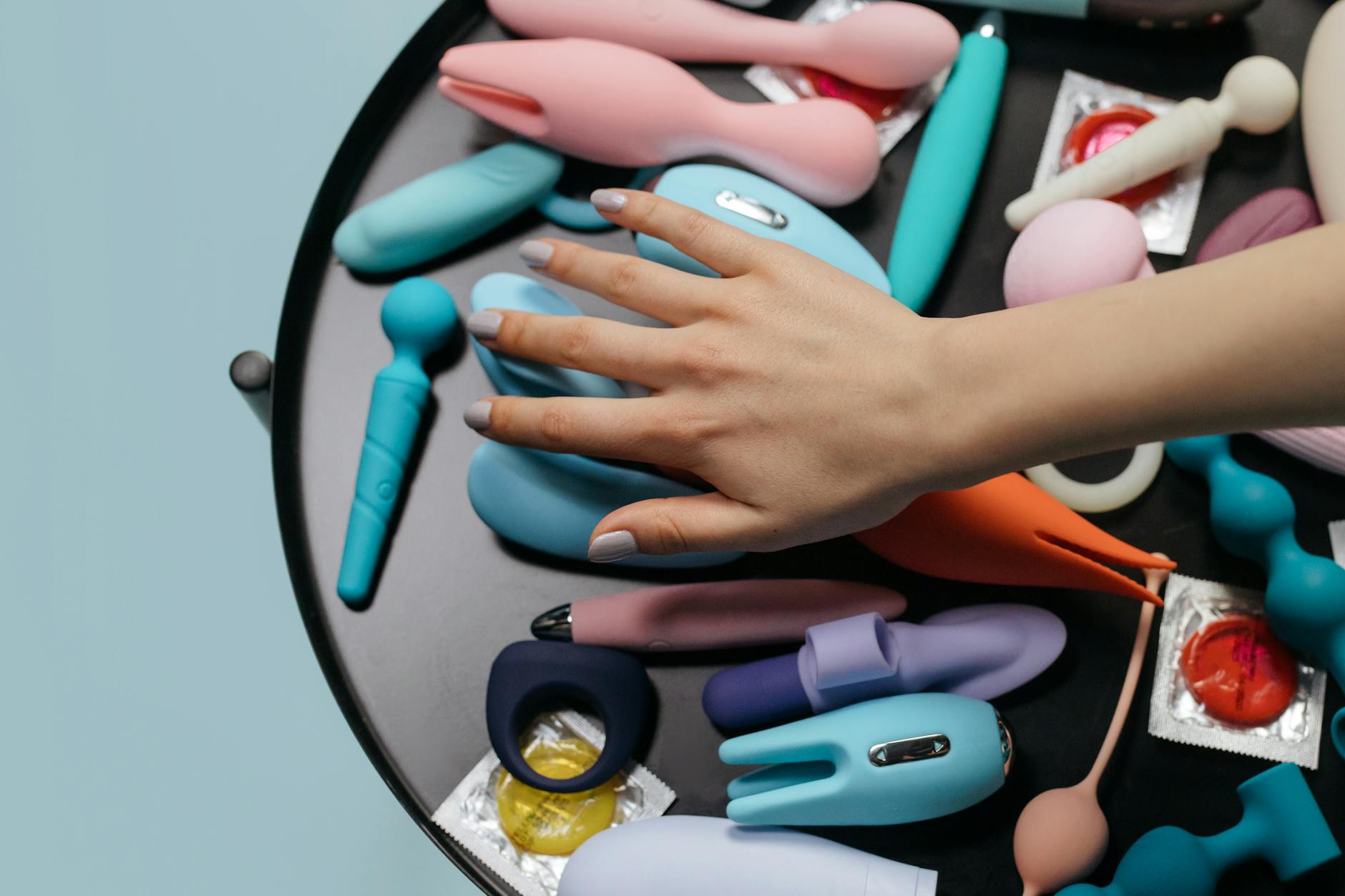
Photo by cottonbro studio on Pexels
Working with a partner, if you choose to
If you eventually want to reintegrate partnered pleasure, the solo reconnection work first is essential. Your partner doesn't need to be part of your healing journey if you don't want them to be.
If you do, they need to understand something crucial: your lemon vibrator isn't a substitute for them. It's your training ground. Your partner's job is to respect your pace, to ask before touching, to celebrate your expansion without pushing it. Some partners do this naturally. Others need explicit conversation or couples therapy to get there.
The best partnerships I see during this phase are ones where the survivor leads entirely. The partner follows. The survivor decides what feels good, what doesn't, what's next. That power dynamic shift, from the trauma context to the healing context, is part of the reclamation itself.
FAQ: Reclaiming Pleasure After Trauma
How long does it take to feel pleasure again after sexual trauma?
There's no standard timeline. Some survivors reconnect with pleasure within weeks of starting intentional practice. Others take months or years. This depends on the trauma's severity, how long ago it occurred, whether you're in therapy, and your individual nervous system's resilience. The key metric isn't speed. It's consistency and self-compassion.
Is it normal to feel nothing when I use a lemon vibrator after trauma?
Completely normal. Numbness or dissociation is a protective response, not a sign you're broken or that the tool won't eventually help. Your nervous system might need several sessions before it feels safe enough to register sensation. If numbness persists beyond a few weeks of regular practice, talk to a trauma-informed therapist. Sometimes the body needs additional support.
Can a lemon vibrator actually help with PTSD symptoms?
Pleasure and orgasm trigger neurochemical changes that can temporarily ease hypervigilance and anxiety. A single session might lower your cortisol for a few hours. Regular practice might reshape your baseline arousal threshold over time. But a vibrator is not trauma treatment. It's a complementary tool used alongside therapy with someone trained in trauma recovery.
What if my partner wants to be involved in my healing and I don't want them to be?
Your body is yours. Your healing timeline is yours. You're allowed to say no to your partner's involvement. You're allowed to do this alone. You might eventually invite them in, or you might not. Both are valid. If your partner is pushing to be involved and that feels unsafe, that's information about the relationship itself.
Are lemon clitoral vibrators quieter than other vibrators?
Lem vibrators and similar clitoral suckers use a different mechanism than traditional vibrators, which can make them feel more discreet in terms of sensation and sometimes quieter acoustically. If noise is a concern due to privacy or anxiety, suction-based designs are often a better option than standard vibration.
Is it okay to use a lemon vibrator if I'm also in therapy for trauma?
Yes, absolutely. In fact, many trauma-informed therapists encourage it as part of a somatic reconnection practice. Just mention it to your therapist so they can support the work you're doing. They might have suggestions for grounding techniques to pair with your solo practice.
This is not the end of your story
Trauma changes pleasure. It does not end it. Every survivor I've worked with who stayed consistent with their reconnection practice, whether that involved a lemon vibrator or other tools, eventually found their way back to sensation, satisfaction, and joy. Not despite what happened. Alongside it, integrated into their story.
Your body is not broken. It's protecting you the only way it knows how. And with patience, intention, and the right tools, it will learn to protect you through pleasure instead.
If you're navigating this journey and want to talk through your specific situation, I'm here. Reach out to Hello Nancy, and we can explore what might work for your healing.