Let's name what actually happened to your body
Pregnancy and birth rewire sensation. Not permanently. Not in a way that means pleasure is gone. But the architecture of what you feel, how quickly you feel it, and what kind of touch lands right now is legitimately different than it was before. And that matters when you're trying to figure out why your lemon vibrator, which used to work beautifully, suddenly feels unpredictable or unfamiliar.
Here's the honest part: almost nobody explains this well. You get books about pelvic floor recovery and four-week checkups, but almost nothing about sensation, arousal, or how to trust your own body again when it's responding in ways you don't recognize.
What pregnancy actually does to sensation
For nine months, your nervous system is flooded with different hormones. Estrogen spikes. Progesterone is through the roof. Blood flow to your genitals increases. Then, almost overnight, it stops. The hormone plunge is sharp and real.
Tissue thickness changes. During pregnancy, the vaginal tissue is thicker, more engorged, more sensitive. After birth, that tissue needs time to recalibrate. If you're breastfeeding, you're still in a lower-estrogen state, which means tissue stays thinner than it was pre-pregnancy. This matters because thinner tissue can feel more sensitive to direct stimulation, or sometimes less responsive depending on where you are in the postpartum window.
The pelvic floor gets stretched and stressed during birth. Even with an epidural, even with a planned cesarean, pregnancy itself changes the pelvic floor's baseline tension and proprioception (your sense of where that area is in space). That means sensation there literally feels different. You might feel less, or you might feel more, or you might feel in places that were never particularly sensitive before.
Nerve endings are fine. This is the part nobody mentions: your clitoris has roughly 8,000 nerve endings. Birth doesn't damage them. What changes is the inflammation and swelling in the surrounding tissue, which can dull sensation temporarily, and the hormonal context in which those nerves are operating.
Why lemon vibrators feel weird right now
If you're returning to sexual pleasure in the first weeks or months after birth, three specific things are happening:
1. Sensation threshold shifts. What felt gently stimulating pre-pregnancy might feel overwhelming now, or it might feel numb. The suction technology in lemon clitoral vibrators is usually gentler than traditional vibration, which is partly why they're smart for postpartum bodies. But even gentle can feel strange when tissue is still recovering.
2. Recovery timeline is longer than you think. The six-week clearance from your doctor means bleeding has stopped and infection risk is lower. It does not mean your nervous system has fully recalibrated. That takes three to six months, sometimes longer. During that window, what feels right changes week to week.
3. Attention is fragmented. You're exhausted. Your nervous system is in sympathetic overdrive (high alert). Your body is producing prolactin if you're breastfeeding, which actively suppresses arousal. Your lem vibrator, which might normally feel like a straightforward path to pleasure, now requires mental bandwidth you don't have. That's not a failing on your part. That's biology.
The physical adjustments that actually help
Four things I recommend to postpartum clients who want to reconnect with pleasure:
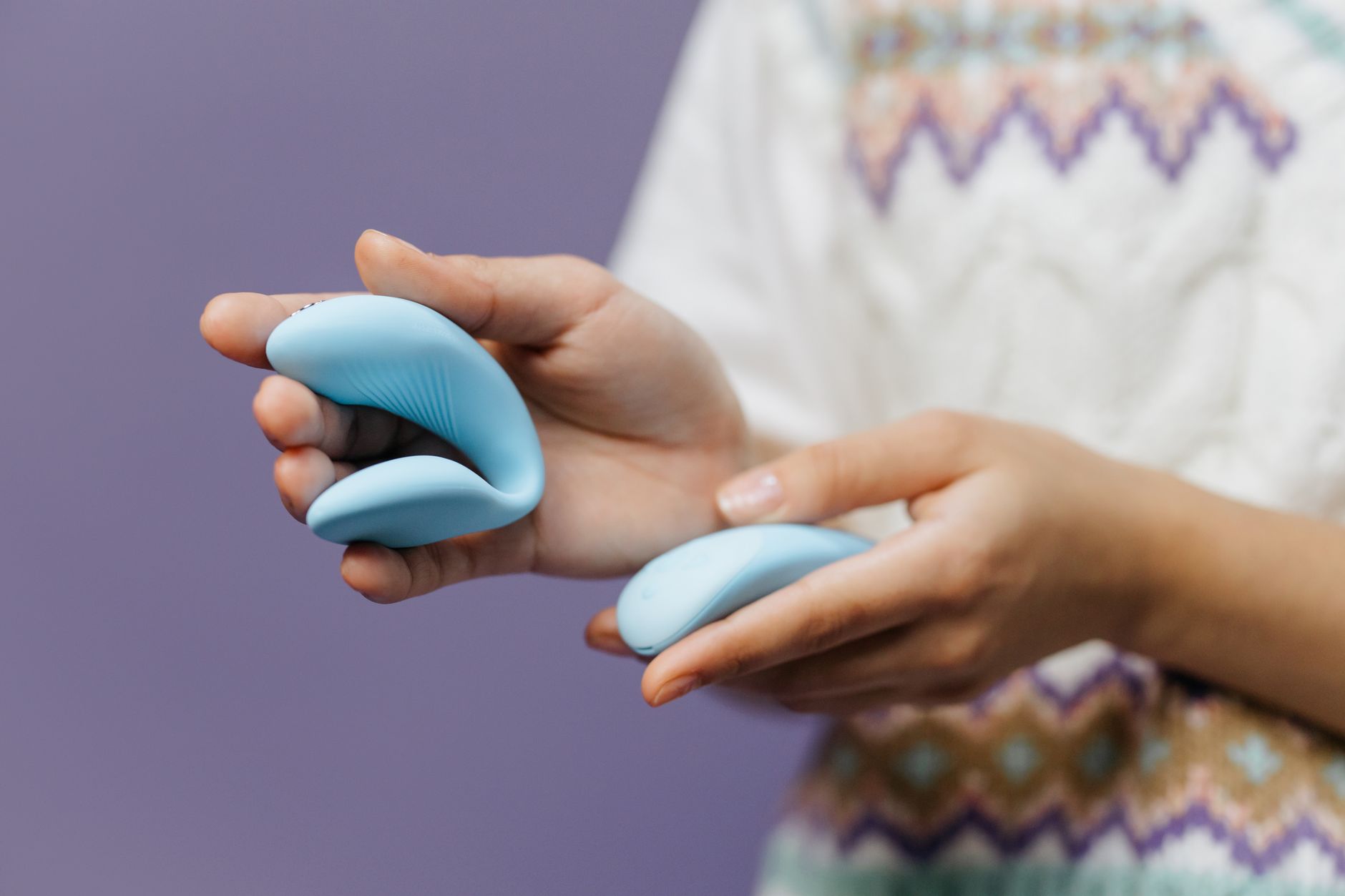
Start with external touch only. This sounds obvious but matters: don't push for internal sensation yet. Your lemon vibrator is designed for clitoral stimulation, which is perfect. Use it externally, starting at the lowest intensity, with plenty of time and zero pressure.
Use lubrication generously. Postpartum tissue is drier than pre-pregnancy tissue, especially if you're breastfeeding. Water-based lube is your friend. This isn't about anything being wrong with you. It's about reducing friction on tissue that's still recovering.
Give yourself longer warm-up time. Arousal is slower postpartum. Budget 20-30 minutes instead of 10. Your nervous system needs time to shift from alert to receptive. This matters more than the vibrator itself.
Separate pleasure from obligation. If you're using your lem vibrator because you think you should be interested in sex again, or because your partner is expecting it, stop. Disconnected pleasure is the opposite of what you need right now. Pleasure should feel like something you're curious about, not something you're checking off a list.
The emotional piece (which is actually the bigger piece)
Honestly though, the physical changes are the easier conversation. The harder one is this: your relationship with your body has shifted. You grew a human. Your body did that. Then you had that human removed from your body in whatever way birth happened. And now you're supposed to feel sexy again. That's a lot.
Many people describe postpartum sensation as disconnected, numb, or unfamiliar. Sometimes that's hormones. Often it's also grief or ambivalence about what your body has been through. You can feel grateful and resentful at the same time. You can love your child and feel strange in your own skin.
If you're with a partner, this is the moment where that conversation matters more than the vibrator. "I want to reconnect with pleasure" is different from "I'm ready for sex to feel normal again." One gives you permission to go slow. The other sets up an impossible timeline.
When to expect sensation to feel normal again
There's no fixed timeline because bodies are weird, but here's the pattern I see clinically:
Weeks 1-4: Don't engage. You're bleeding, healing, adjusting. This is not the window for exploration.
Weeks 5-12: Gentle curiosity is fine. If you want to try your lemon vibrator, keep intensity low and duration short. Your body will tell you what it wants. Listen to that.
Months 4-6: Sensation usually starts feeling more stable. Arousal is still slower than pre-pregnancy, but it's more predictable. If you're not breastfeeding, hormones are rising back toward baseline.
Months 6-12: Most people feel like themselves again, though "themselves" might be different than pre-pregnancy. That's normal. Your nervous system has integrated the experience of pregnancy and birth.
If you're still not feeling like yourself a year postpartum, talk to someone. That's not about your vibrator. That might be postpartum depression, unprocessed trauma from birth, or a legitimate shift in your nervous system that needs professional support.
How to rebuild trust with your body
Here's what I tell clients: your body didn't break. It transformed. And transformations are disorienting. You're learning to live in a new house. That takes time.
Start small. Your lemon clitoral vibrator is designed to work with your body, not against it. Use it as a way to listen, not as a way to prove something. Notice what feels good. Notice what feels strange. Notice what makes you curious versus what feels obligatory.
If your partner is involved, let them in on that curiosity, but make it clear: this is about you rebuilding a relationship with your own pleasure, not about performing recovery for them. They can support that, but they can't rush it.
Most importantly, give yourself permission to be different than you were. Postpartum bodies feel different because they are different. That's not failure. That's information.
People also ask
How long after birth can you use lemon vibrators safely?
Check with your doctor at your six-week postpartum visit. Once you have clearance for sexual activity, you can start exploring. But "cleared" doesn't mean "ready." Your body might need more time to feel comfortable with stimulation. Go at your own pace, not your doctor's clearance timeline.
Why does clitoral stimulation feel numb or painful postpartum?
Numbness usually means hormones are still low or tissue is swollen. Soreness might mean there's still inflammation, or that you're returning to stimulation before the tissue fully healed. Both are temporary. If soreness persists beyond three months postpartum, talk to a pelvic floor physical therapist.
Is it normal to feel less interested in sex after pregnancy?
Completely normal. You're exhausted, your hormones are in flux, your body has been through something intense, and you're probably not sleeping. Lowered desire isn't a problem to fix. It's information. Once you're sleeping more and your nervous system settles, interest usually returns. If it doesn't, that's worth exploring with a therapist.
Can breastfeeding affect how my lemon vibrator feels?
Yes. Prolactin (the milk-making hormone) actively suppresses arousal. Combined with lower estrogen levels while breastfeeding, sensation can feel dampened. This doesn't mean something is wrong. It means your body is doing exactly what it's supposed to be doing. Sensation usually shifts when you wean or when breastfeeding frequency decreases.
What if I feel no pleasure at all postpartum?
That's anhedonia, and it's worth mentioning to your doctor, especially if it extends beyond physical sensation into other areas of life. Postpartum depression can show up as numbness to pleasure. That's treatable. You don't have to push through it alone.
Should my partner be involved when I'm reconnecting with pleasure?
That's entirely your call. Some people find it helpful to explore alone first, to rebuild trust with their own body without anyone else's expectations in the room. Some people feel more comfortable with their partner present but not involved. Some want their partner fully involved. There's no right answer. What matters is that it's your choice, not something you're doing because you think you should.
The real timeline
Your body didn't break. You didn't lose the ability to feel pleasure. What changed is the context in which sensation happens. Hormones, tissue, attention, and trust all shifted. Rebuilding that takes time. And that's not a failure. That's healing.
When you're ready to explore again, your lemon vibrator will be there. Your body will tell you when that moment arrives. Until then, be patient with yourself. You've earned it.