Here's what nobody talks about
By 40, most couples have stopped having sex. Not because they don't care about each other. Because life has crowded out curiosity. Kids, work, aging parents, financial stress, the slow erosion of small affections. And then somewhere around midlife, one partner realizes they haven't initiated sex in months, and the other has stopped waiting.
This is when things get harder. Because now you're not just dealing with lower desire. You're dealing with shame, resentment, and the quiet fear that you've simply outgrown each other.
Here's the thing I see in my practice over and over: couples don't need more time or a better vacation. They need permission to be curious again. And sometimes that curiosity starts with a tool.
Why midlife changes everything (and not always for the worse)
Let me be direct. Between 40 and 55, testosterone drops for both partners. Estrogen drops for women. The vaginal tissue gets thinner and less elastic. Arousal takes longer to build. Orgasms feel different. Bodies are heavier, softer, more marked by time.
What most therapists won't tell you is that this is also when sex becomes possible in a way it wasn't before.
Your partner is no longer a stranger you're figuring out. You know their skin. You know what makes them laugh before they laugh. You've survived things together. The performance requirement drops away. For the first time, pleasure becomes actual intimacy instead of a thing you perform toward each other.
But first you have to get back in the room together.
What lemon clitoral vibrators do in a partnership context
This is not about substitution. A lemon vibrator doesn't replace your partner. It does something more useful. It breaks the stalemate.
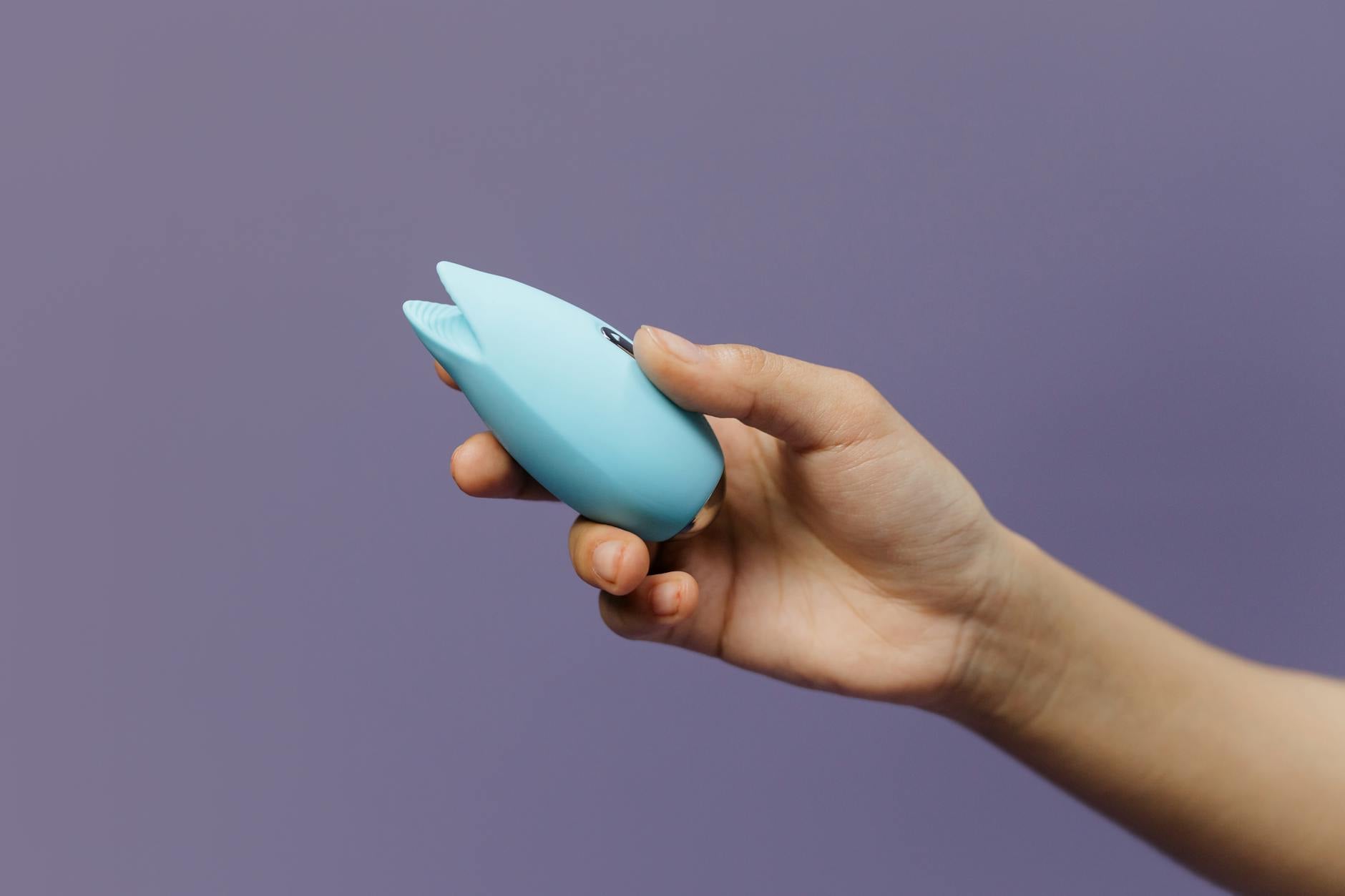
Here's the mechanics. Clitoral vibrators like the Lem use air-suction technology. This creates a sensation that's gentler than traditional vibration, especially for the 40-plus body where tissue is more delicate and direct friction can feel intense or even painful. The pleasure builds gradually, predictably. This matters because midlife bodies need time and consistency to respond.
But here's the relational part. When you introduce a lemon sucker into partnered sex, you're saying something without words. You're saying "I want us to feel good together, and I'm willing to be creative about how." You're saying "Your pleasure matters enough to me that I'll try something new." You're saying "I'm not done with you."
For a lot of couples, that's the permission they've been waiting for.
The conversation piece (this is the real work)
Introducing any toy into a long-term partnership triggers ancient fears. "Does this mean I'm not enough?" "Are you bored with me?" "Is this a sign the relationship is in trouble?"
I usually reframe it. You're not bringing a vibrator in because the relationship is broken. You're bringing one in because you respect your partner enough to acknowledge that their body has changed, that desire has changed, and that you want to meet each other there instead of resenting the gap.
The conversation looks like this:
"I miss us. I miss feeling close to you. I've been reading about how our bodies change, and I found something I'd like to try together. Not instead of you. With you."
Notice what that does. It centers desire, not complaint. It centers curiosity, not criticism. It makes the tool a shared project instead of a solo solution.
Most couples I work with report that the actual moment of use is less important than the conversation that happened before. Because the conversation was the real reconnection.
The practical adjustments that help
If you're over 40 and introducing lemon vibrators or any clitoral vibrators into a partnership, here's what actually matters:
Start with curiosity about your own body first. Solo exploration takes the pressure off. You learn what settings feel good, what rhythm works, what your body is capable of now. Then you bring that knowledge to your partner instead of both of you fumbling.
Slow down the whole thing. Foreplay isn't a 10-minute warm-up. It's 30 to 45 minutes of touching, kissing, talking. The lemon vibrator comes in when you're already aroused, not as the opener.
Use a water-based lubricant. Not because anything is wrong with you. Because the tissue is thinner, and lubrication makes everything feel better and easier. This is practical, not pathological.
Focus on the sensation, not the outcome. For decades, midlife sex has been goal-oriented. Orgasm or it didn't work. Let that go. The point is connection. Orgasm is optional. Pleasure is the baseline.
When a lemon vibrator saves a partnership (and when it doesn't)
I want to be honest here. A vibrator is not a fix for a broken relationship. If you're not talking to your partner. If there's active resentment. If one person has checked out. A toy won't repair that.
What it can do is create a moment of safety and curiosity when both people are ready but stuck. It can restart communication about desire when shame has closed that door. It can remind you that your partner's body is still interesting to you.
But it does require both people to show up willing.
The emotional layer nobody mentions
Here's what I notice: couples over 40 are grieving. Grieving their younger bodies. Grieving the intensity of early desire. Grieving time itself. And you can't make space for new pleasure until you've acknowledged that grief.
Sometimes that means talking about it. Sometimes it means just knowing it's there. But lemon clitoral vibrators work best when both partners acknowledge that you're not trying to recreate sex from 20 years ago. You're creating something different. Possibly better. Definitely different.
When to seek additional help
If you're introducing a vibrator and one partner is still shut down. If desire is only happening on one side. If there's pain during sex or it feels increasingly distant. Those are signs to talk to a sex-positive therapist or a couples counselor before you go further.
There's no shame in that. The midlife transition is real. The body changes are real. The relational disconnection is real. Professional support helps you navigate it together instead of apart.
The other thing lemon vibrators do
Beyond the physical sensation, what lemon sucker technology offers is novelty without judgment. You're both learning something new. You're both making it up as you go. You're both in the position of not-knowing.
For couples who have been together 15 or 20 years, that vulnerability can feel radical. And it often creates more intimacy than the orgasm itself.
Practically speaking
If you're thinking about this with your partner, start with the conversation, not the toy. Bring it in when you're both curious. Use guides like the ones Hello Nancy offers to walk you through setup and care. Keep it light. Expect a learning curve. And remember that the point isn't performance. The point is togetherness.
Your partnership at 40 plus is not a relic of younger passion. It's a different thing entirely. Often deeper. Often more creative. Often more honest. Lemon clitoral vibrators work because they assume that your pleasure matters, that your partnership is worth the effort, and that desire can show up in new forms across a lifetime together.
People also ask
Can we use a lemon vibrator if one partner is hesitant?
Hesitation is normal. Most people have grown up with shame around toys. Start by exploring solo first. Then share what you learned without pressure. Hesitation usually softens when the person feels safe and curious instead of pushed.
Do lemon vibrators work the same way for both partners?
No. Your partner might need a different rhythm, pattern, or intensity. What feels amazing for one person feels overwhelming for another. That's why exploration matters. You're learning each other's bodies again.
What if we've been having the same kind of sex for 20 years?
Then you're probably both bored and neither of you wants to say it. That's actually a good sign. Boredom means you're ready for novelty. Lemon vibrators are a low-stakes way to change the script without changing the relationship.
Is using a vibrator cheating or a sign of infidelity?
Only if you've decided it is. Most therapists and sex educators see toys as an extension of partnership. You're not replacing your partner. You're exploring together.
How do I bring this up without sounding like I'm rejecting my partner?
Lead with desire, not complaint. "I want us to feel good" lands differently than "We're not having enough sex." Frame it as curiosity you want to share, not a problem you're solving alone.
What if my partner wants to use it but I don't?
That's okay. You can be present without being the primary user. Your job is to stay curious and engaged, not to perform. Some partnerships find that one person is more into the tool, and the other is into watching and connecting. That's valid too.
References
Research on sexual satisfaction in midlife partnerships emphasizes the importance of communication and novelty in long-term relationships (Gottman & Silver, 2015). Studies on women's sexual health across the lifespan show that clitoral stimulation preferences often change with age and hormonal shifts, and that air-suction technology creates gentler, more sustained pleasure than traditional vibration (Herbenick, 2009). Relationship research consistently shows that couples who approach transitions with curiosity rather than shame have better outcomes in both connection and satisfaction (Johnson, 2019).