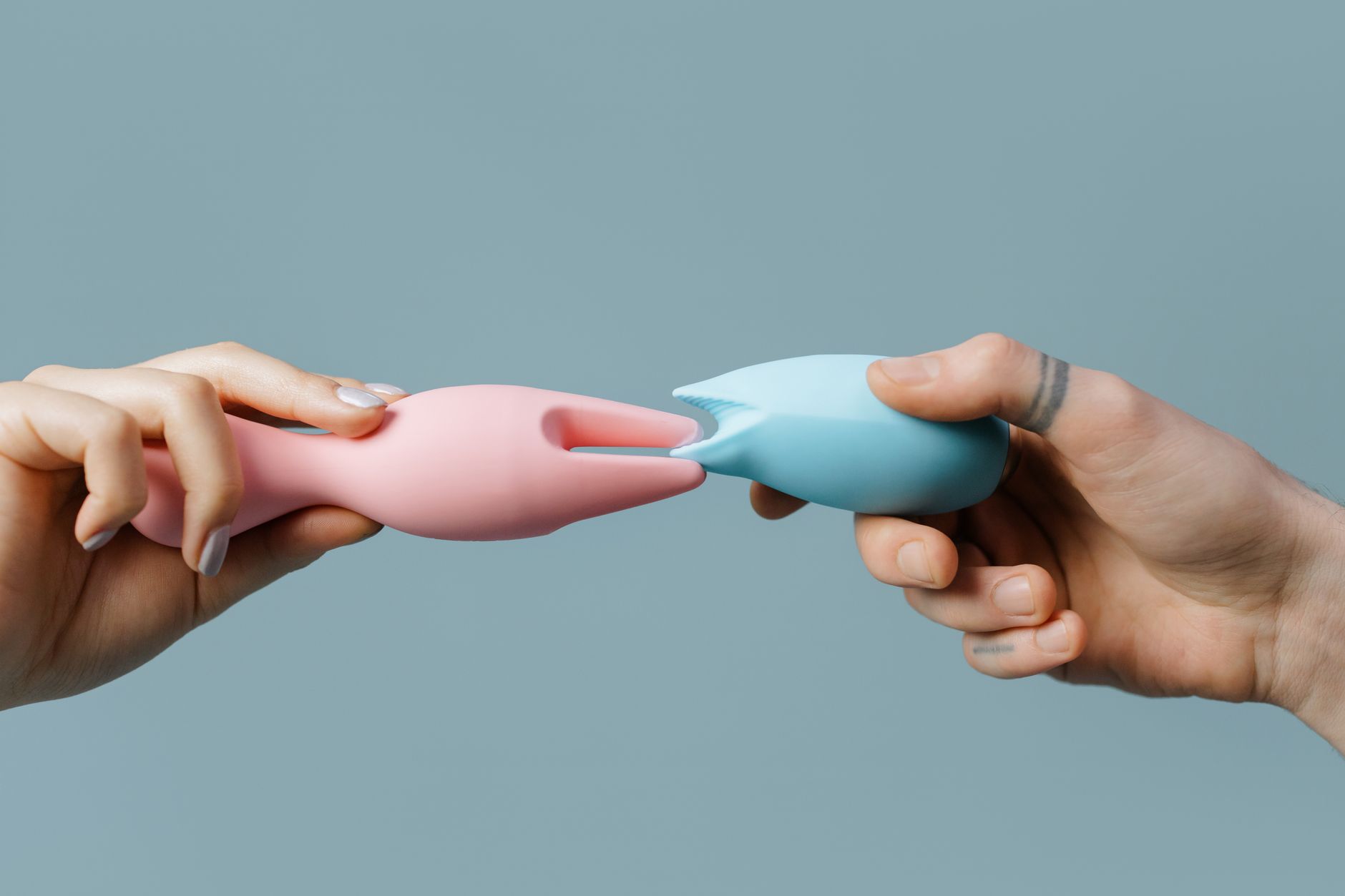
Here's the thing about clitoral overstimulation
Your clitoris doesn't have infinite tolerance. Most people with vulvas hit a threshold where continued direct stimulation stops feeling good and starts feeling raw, numb, or almost painful. That's not a personal failure. That's your nervous system doing exactly what it's supposed to do.
The frustration comes when you're close to orgasm and suddenly the sensation that was building pleasure becomes uncomfortable. You have to stop. You lose momentum. Then comes the guilt, the "why can't I just push through" conversation in your head, and the feeling that something is wrong with your body. Nothing is wrong. Your body is communicating a boundary.
The fix isn't willpower or toughness. It's understanding what overstimulation actually is, recognizing the early warning signs, and switching your approach midway. That's where lemon vibrators and suction technology create a real difference.
What clitoral overstimulation actually is
When you apply consistent, direct vibration to the clitoris, the nerve endings stop responding in the way they did moments before. The sensation changes from intense-pleasure to intense-sensation. That switch happens in seconds and it's not gradual. It's a cliff.
Think of it like this. Your clitoris has about 8,000 nerve endings packed into roughly the size of a pea. Direct vibration stimulates all of them at once, very efficiently. After a certain point, those nerves get fatigued. They're not numb exactly. They're overwhelmed. It's the difference between a firm massage and someone pressing the same spot so hard it hurts.
Birth control hormones can make this threshold lower. So can anxiety, stress, and certain medications that affect sensation. But honestly, even people with no medical complications hit this wall. It's neurological, not a character flaw.
Why standard vibrators make overstimulation worse
Most vibrators use continuous vibration across the whole head. They're efficient at stimulation, which is the entire point. But that efficiency becomes a liability when you're already sensitive. Once overstimulation sets in, increasing speed doesn't help. Changing angle sometimes helps a little. But you're still applying sustained, direct pressure to an overwhelmed nerve cluster.
Lemon vibrators work differently. Suction devices like the Lem use rhythmic air-pulse stimulation instead of vibration. That means instead of constant direct pressure, you're getting a pattern of gentle suction and release. The sensation is more diffuse. It engages nerves across a wider area of tissue instead of hammering the most sensitive spot.
That pattern-based approach is exactly what helps when overstimulation is a real concern. Your clitoris gets stimulation, but it's not relentless. It's more like waves than a continuous hum.
How to recognize when you're heading toward overstimulation
Three signs show up before things get uncomfortable. Learn these and you can intercept the problem.
Sign one: the sensation starts to dull. The pleasure that was sharp and clear five seconds ago becomes fuzzy. It's still there, but you notice you're pushing harder or concentrating harder to feel it the same way. That's your system telling you it's hitting capacity.
Sign two: you feel the urge to pull away or shift position. Not a conscious decision. Just a physical impulse. Your body wants to break contact or change angle. Honor that. That impulse is useful information.
Sign three: pleasure starts to feel raw or almost itchy. Some people describe it as a burning sensation, but not in a good way. Others say it feels like the sensation is happening too fast for their brain to process. Any of these sensations means you're at the edge.
The moment you notice any of these, don't power through. Switch gears.
The lemon vibrator approach to continuing without pain
When you feel overstimulation starting, move to a lemon clitoral vibrator or air-suction toy if you have one. If you're already using a Lem, dial down to pattern 1 or 2 instead of whatever higher setting you were on. Then do three things.
First, shift the contact point. Instead of direct clitoral stimulation, position the Lem slightly off to the side or lower on the vulva. This engages nerve endings in a different part of the tissue. The sensation resets. It's immediate and it works.
Second, slow your breathing and your body's movement. Overstimulation often comes paired with tension. You're holding your breath without realizing it. You're clenching. That tension makes the sensation feel more intense and more raw. When you notice it, breathe out. Loosen your pelvis. The same toy on a tense body feels completely different from the same toy on a relaxed body.
Third, lean into the pattern rather than the intensity. A Lem's rhythmic pulses actually feel better at lower settings for overstimulated tissue. You're not trying to build towards orgasm anymore. You're enjoying the sensation itself and letting orgasm happen if it wants to.
A lot of people find that stepping back from intensity actually gets them to orgasm faster because they stop white-knuckling the experience. When you relax, your nervous system relaxes. When your nervous system relaxes, orgasm becomes possible again.
Preventing overstimulation before it starts
You don't have to hit the wall every time. Small changes upfront make a difference.
Warm up longer before introducing the vibrator. Spend 5-10 minutes with touch alone. Let your clitoris wake up gradually. When you finally add the lemon vibrator, start at the lowest setting. Not because you're weak or can't handle sensation. Because you're smart and you know your threshold is lower than someone else's might be.
Use lube, even if you think you don't need it. Lube reduces friction and makes stimulation feel softer. It's the difference between direct pressure and gliding sensation. Water-based lube works great with silicone toys. It also gives you an extra layer between your skin and the toy, which can be the difference between comfortable and overstimulated.
Take breaks. Not long ones. Just 30 seconds of no contact every 3-4 minutes. Let your nervous system reset. You can come back stronger. This is especially useful if you've struggled with overstimulation before. Your body learns that stimulation doesn't have to be nonstop to work.
Know your cycle. If you menstruate, your clitoral sensitivity shifts through your cycle. Right before your period, your clitoris is often more sensitive and overstimulation happens faster. During ovulation, you might have a higher threshold. Pay attention to the patterns in your own body and adjust accordingly.
When to see someone about persistent overstimulation
If overstimulation happens almost every time and nothing helps, talk to a healthcare provider. There are real medical reasons this can happen. Vulvodynia is one. Hormonal imbalances can contribute. Certain medications make sensitivity worse. Pelvic floor tension sometimes plays a role.
A gynecologist or sexual health specialist can actually help. Topical treatments, pelvic floor physical therapy, and sometimes hormonal adjustments change the game. You don't have to just accept that pleasure ends when overstimulation starts. There's treatment for this.
The emotional layer you shouldn't skip
Clitoral overstimulation often comes with shame. You think something is broken. You think you're too sensitive or not sensitive enough. You compare yourself to people who seem to just keep going. Stop that conversation.
Your sensitivity is information, not a flaw. It tells you what your body needs in real time. Learning to listen to it and adjust is actually a superpower, not a weakness. Partnered sex becomes better because you know how to communicate your edges. Solo pleasure becomes richer because you stop fighting your own nervous system and start working with it.
The lemon vibrator sits in this conversation perfectly. It's designed with overstimulation in mind. Suction works better than vibration for sensitive tissue. Lower settings feel better than higher ones. It all points to the same truth. Your body isn't the problem. The tool and the approach matter.
People also ask
Can clitoral overstimulation cause long-term damage?
No. Overstimulation is uncomfortable and it stops you from continuing, but it doesn't cause injury. Your clitoris isn't physically harmed. Once you step back and rest, sensation returns to normal within minutes. What overstimulation does do is create an association where you start avoiding masturbation or partnered sex because you expect pain. That's the real damage, and it's avoidable. The solution is understanding what's happening and adjusting your technique.
Why do lemon vibrators feel different than regular vibrators?
Lemon clitoral vibrators use air-pulse or suction technology instead of traditional vibration. Instead of a motor creating consistent buzziness, a Lem creates rhythmic pulses of suction. That pattern-based approach spreads stimulation across more nerve endings and feels gentler, even at higher settings. For overstimulated tissue, the difference is significant. It's like comparing a targeted laser to ambient light. Same goal, completely different sensation.
Is it normal to need breaks during masturbation?
Completely normal. Most people need to pause, shift position, or change intensity at some point. Overstimulation isn't a sign you're broken. It's a sign your body is telling you it needs something different. People with very high sensation thresholds exist, but they're not the majority. Your need for pauses is just as valid. Honor it.
Can I prevent overstimulation with lube alone?
Lube helps significantly, but it's not a complete fix if your clitoral sensitivity is genuinely low. Lube reduces friction and softens sensation, which does push back the overstimulation threshold. But if you're dealing with medications that lower sensation, hormonal shifts, or just naturally lower thresholds, you'll still hit the wall. Combining lube with lower vibration settings, pattern-based stimulation like a lemon vibrator offers, and intentional breaks is the full toolkit.
What's the difference between overstimulation and just needing lubrication?
Lube shortage feels dry and uncomfortable from the start. Overstimulation feels good at first, then rapidly becomes raw or numb. With lube issues, more lube fixes it immediately. With overstimulation, lube doesn't fix it because the issue is neural, not mechanical. You've overwhelmed your nerve endings, not your skin. The solution is changing the type of stimulation or dialing down intensity, not adding more of what you're already doing.
How long does overstimulation sensation last after stopping?
Usually 5-15 minutes. Once you step away from the toy, your clitoris calms down pretty quickly. Sensitivity returns to normal. Some people find that applying gentle pressure without vibration (like holding the Lem against their skin without turning it on) actually speeds up recovery. It's a reset button. But honestly, sometimes stepping away completely and doing something else entirely is what your nervous system needs.
You deserve pleasure that doesn't come with rawness
Clitoral overstimulation is one of those problems that nobody really talks about, so a lot of people think they're alone in dealing with it. They're not. It's common enough that there's a whole category of toys designed with this in mind. Lemon vibrators and air-suction technology exist because so many people found standard vibrators pushed past their threshold.
Your sensitivity isn't a limitation. It's a signal. Learning to read that signal and respond to it changes everything. You stop fighting your body. You start enjoying it. And pleasure becomes something that can actually last, instead of stopping the second things get intense.
If you want to explore this further or talk through what your specific sensitivities look like, reach out to us. We can help you figure out the right tool and the right settings for your body.