
Let's start with the obvious part
Your partner wants you more than you want sex right now. This is one of the most common relationship frictions I see in my practice, and it carries a particular kind of guilt. You love them. You're attracted to them. But the desire just isn't firing the way theirs is, and you're stuck in a loop of obligation versus resentment versus withdrawal.
Here's what I've learned: a lemon clitoral vibrator isn't going to fix desire that isn't there. But it can transform the conversation from "why don't you want me" into "how do we both get what we need." That's not romance. It's logistics. And logistics is actually sexier.
Why desire mismatch happens (and why it's not your fault)
Desire discrepancy rarely means someone stopped loving someone else. It usually means life is doing one of several things: stress is eating your bandwidth, hormones have shifted, your nervous system is running hot, or you've been giving so much to a partner or job or family that there's nothing left in your tank.
I see this pattern constantly with women in their 30s and 40s. They're managing caregiving, careers, aging parents, kids. Their partners often have less cognitive load managing the same household. So their libido reflects that reality. It's not rejection. It's burnout.
The second thing that happens is this: obligation builds resentment. When sex becomes something you do for someone else instead of for yourself, your body closes down. The nervous system says "this isn't safe" even if your heart knows your partner is safe. That creates a vicious cycle where the less genuine desire you feel, the more obligated you become, and the more shut down your body gets.
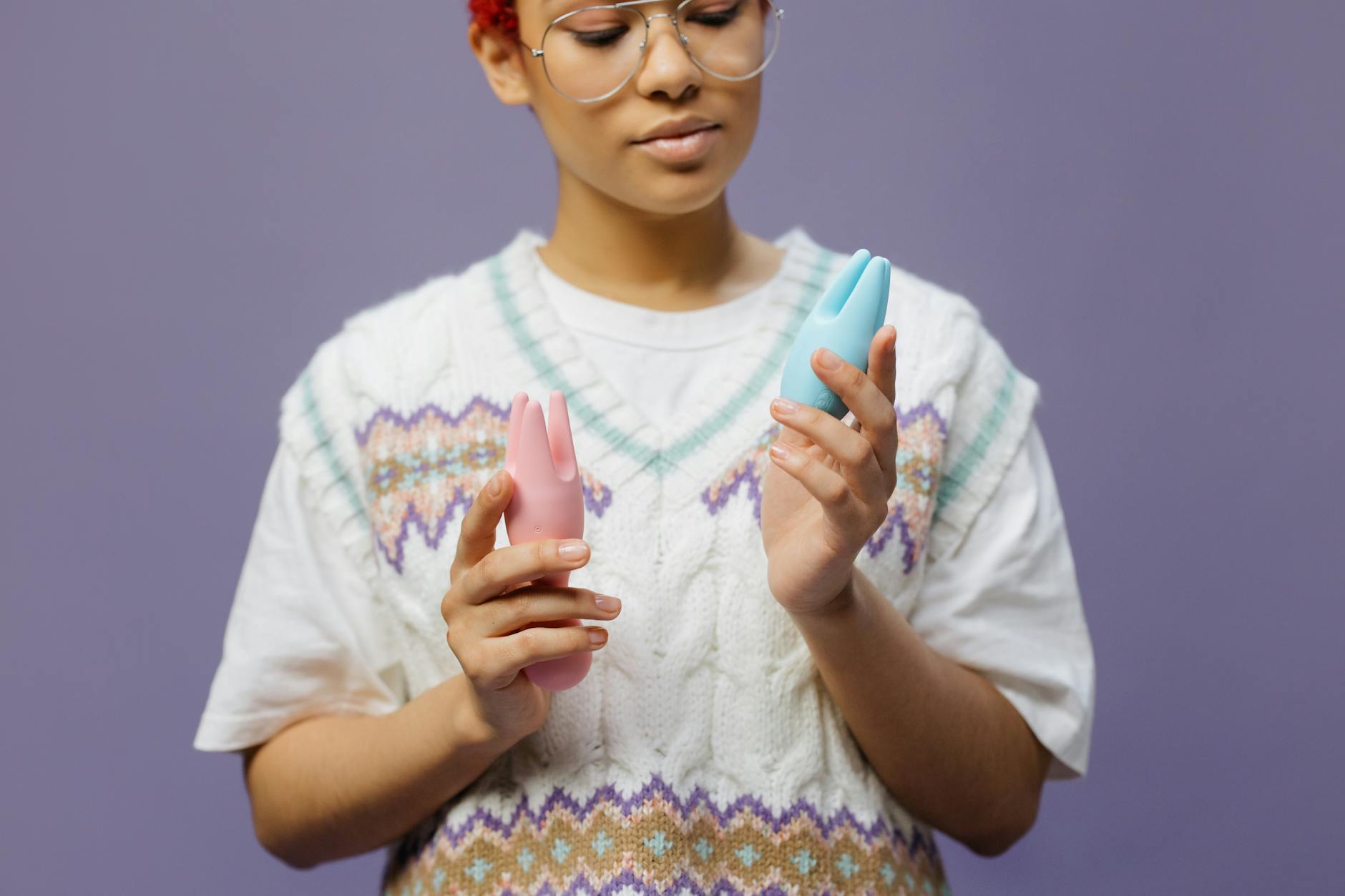
Photo by cottonbro studio on Pexels
How a lemon vibrator changes the structure of the conversation
Instead of "I'll have sex because you want to," a lemon clitoral vibrator lets you say "I'll prioritize my own pleasure, and you can be part of that." This is a completely different transaction. You're not performing. You're not accommodating. You're claiming something for yourself, and your partner gets to participate.
For the lower-desire partner, this is crucial because pleasure is the only thing that rebuilds authentic sexual desire. You cannot think yourself into wanting sex. You have to feel it. And feeling it requires your nervous system to be engaged, not in protection mode.
For the higher-desire partner, they get something they desperately want, which is to be included in your pleasure. Most partners whose desire is higher aren't actually trying to force intimacy. They're trying to feel wanted, connected, and relevant. A lemon vibrator in that context becomes a tool for closeness instead of a substitute for it.
The mechanics of using a vibrator when desire doesn't match
Here's the practical piece. When you're starting from lower desire, the worst thing you can do is wait until your partner wants sex and then use the toy as a quick fix. That still feels obligated. Instead, use the vibrator on your own terms first. Get to know your own pleasure pathway with no audience, no timeline, no one waiting.
Many people I work with discover something interesting when they do this. Alone, with a lemon vibrator, they realize they actually like sensation more than they thought. They find intensity levels that feel good. They practice extending arousal instead of rushing to the finish line. This solo exploration is not selfish. It's the opposite. It's the only way you'll know what to ask for when your partner is involved.
Then, when you're ready to include your partner, the vibrator becomes a conversation piece. You might say: "I want you here, but I need the vibrator because this is how my body responds right now." You're centering your pleasure. Your partner is centering their connection to you. Nobody's performing.
The rhythm that actually works
With mismatched desire, frequency becomes negotiable in a way it isn't when both people are equally interested. You're not aiming for twice a week or whatever the relationship-advice books say. You're aiming for sustainable, meaning something that doesn't make you resentful.
Try this: establish a rhythm where you focus on your own pleasure two to three times a week with the lemon vibrator. Not necessarily with your partner. Then, once a week or every ten days, invite your partner into that space. They don't get the full show every time. They get to witness or participate in your pleasure. They get to feel wanted because you're wanting yourself in front of them.
This actually raises desire over time in ways that obligation never does. Your nervous system relaxes. You stop bracing for pressure. Your partner gets to feel like a participant instead of a pest. And because you're more relaxed, you're actually more available when you do want contact.
What changes when you use this approach
Three things tend to shift:
First, you stop resenting your partner. This alone is massive. Resentment is the libido killer. Once you stop seeing sex as something you owe, you start seeing your partner differently. They're not a threat to your time and energy. They're a person you love who gets to watch you feel good.
Second, your pleasure actually builds. When you're not anxious or obligated, your body responds. It takes longer to warm up and that's fine. The lemon vibrator handles the consistency part while your brain gets to relax. This is especially important if sensitivity has shifted or if sensation builds slowly over time in your body.
Third, the conversation about desire changes. Instead of "you want too much," it becomes "we want different things and we're both okay with that." Instead of your partner feeling rejected, they feel included in your pleasure. That's not nothing.
The honest part about sustainable mismatched desire
I want to be clear about something. A vibrator doesn't solve desire discrepancy if the root issue is actually incompatibility or resentment or a partner who refuses to acknowledge your needs. If your partner's response to a lemon vibrator is "that's not the same as me," or if they feel threatened by your pleasure, that's a different conversation. That's a conversation with a therapist.
But if your partner's issue is just that they want more physical contact and feel rejected, a vibrator becomes a way to offer them something real. You're offering closeness. You're offering participation in your pleasure. You're offering to show them that you can feel good, and they can be part of that.
Some couples find that introducing a clitoral vibrator into their intimate space actually rebuilds desire in the lower-desire partner. Not because the toy is magical, but because the pressure lifts. Your body is no longer in defensive mode. You're exploring sensation in a way that feels controlled and good. And your partner gets to be there.
When to reconsider the whole thing
If you've been using a lemon vibrator consistently with your partner for six to eight weeks and you still feel zero desire even in that context, check in with yourself about a few things.
Is the relationship otherwise good? Do you feel safe? Do you respect and like your partner? If the answer is no, the vibrator isn't the problem. The relationship is. A tool can't fix a broken foundation.
Are you burned out in other areas? If you're running on empty everywhere, your body's "no" to sex might actually be accurate information. You might genuinely need rest, boundaries at work, or a conversation with your partner about who's carrying what load.
Have you talked to a doctor? Sometimes flagged desire is medical. Thyroid, hormones, medication side effects, depression. Those all need checking before you assume the issue is emotional or relational.
The goal isn't matching desire. It's mutual acceptance.
I think the cultural story about relationships is that both people should want sex equally, always. That's garbage. Desire naturally fluctuates. Sometimes it mismatches. The goal isn't to force it to match. The goal is to create a structure where both people feel okay.
A lemon vibrator in the hands of someone who's using it for themselves, not for their partner, becomes a bridge. Not a replacement. Your partner gets to feel close. You get to feel good. Neither of you is performing or resentful.
That's not settling. That's actually knowing how to sustain intimacy across real life.