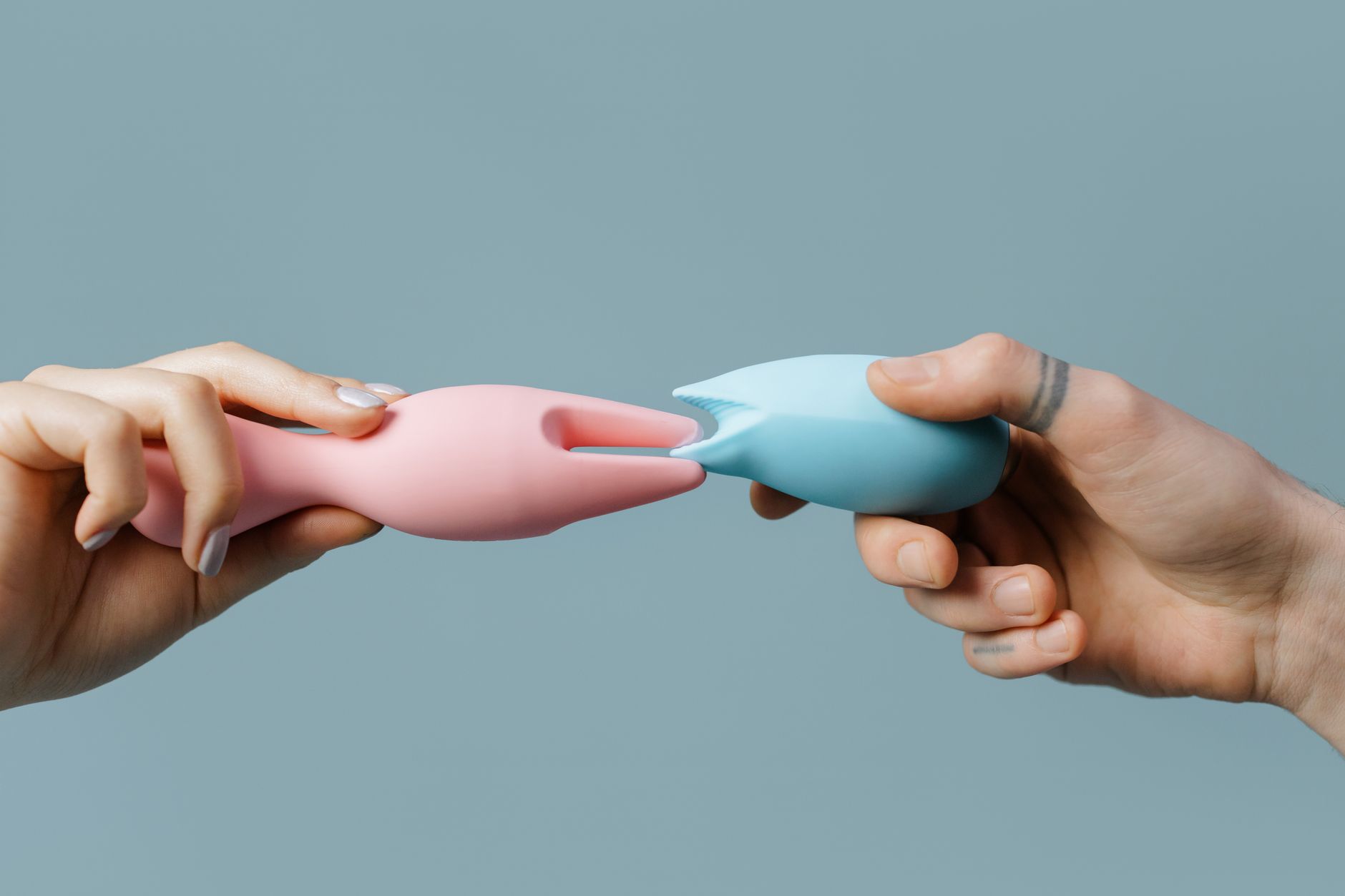
Let's name the tension first
One partner wants sex twice a week. The other wants it twice a month. No one's broken. No one's wrong. But someone's frustrated, and the other person feels pressure or guilt every time desire comes up. This is the story I hear most often in my practice, and it's wildly more common than anyone admits.
Here's what usually happens next: the lower-desire partner tries harder (and feels more resentful). The higher-desire partner waits (and feels more rejected). Both are operating from a misunderstanding about what desire mismatch actually means.
Why desire frequency gets confused with desire quality
Frequency and intensity are completely different animals. You might genuinely love sex with your partner but want it less often than they do. That's not a compatibility problem. That's neurology.
Some people naturally run on a higher baseline of sexual interest. Others need more time between experiences to rebuild desire. Neither pattern is better or worse. But when the mismatch isn't addressed directly, it breeds resentment fast.
Here's the part most couples miss: the lower-desire partner often feels guilty enough to say yes when they don't genuinely want to. That leads to mechanical sex, which breeds more disconnection, which makes both people less interested in trying. A lemon vibrator (or any clitoral vibrator) interrupts that spiral by separating "I want to be sexual with you" from "my body isn't ready for partnered sex right now."
How frequency mismatches actually show up
Say your partner initiates on a Tuesday night. Your body feels neutral. Not resistant, not enthusiastic. Just neutral. You have three choices:
- Say no and feel guilty
- Say yes and feel resentful
- Say "not tonight, but I'd love to use my lemon vibrator with you here"
Option three sounds simple but it's radical. You're saying yes to connection and desire, just not in the traditional package. Your partner gets to witness your pleasure without needing to perform or wait for your body to catch up. You get to explore what you actually want instead of what you think you should want.
This is particularly useful with lemon vibrators because they work so quickly. The suction technology means you can go from neutral to genuine arousal in 10 to 15 minutes instead of 30 or 45. That shifts the whole dynamic. Suddenly, "I'm not sure I want sex" becomes "Let me warm up and see what happens."
The practical setup that changes everything
If your partner typically wants sex more often than you do, try this: on nights when they initiate and you're uncertain, suggest using a lemon clitoral vibrator together instead of jumping straight to penetration or traditional partnered sex.
Set a specific intention. This isn't foreplay that leads somewhere else. This is the main event. You're exploring your own pleasure while they're present. They can be touching you, talking to you, or simply there. You get to control the intensity and pacing with My Lemon Toy's intensity settings.
The beauty here is that you're not performing. You're genuinely discovering what your body wants in that moment. And here's what I see happen repeatedly: when the lower-desire partner stops forcing themselves into unwanted sex, their actual desire often increases. Pressure kills desire. Permission resurrects it.
Why this works when frequency mismatches won't budge
Frequency mismatches rarely resolve because both partners are treating them as a problem to solve instead of a difference to accommodate. The higher-desire partner wants more. The lower-desire partner wants less pressure. Neither is wrong. Both are stuck.
Using a lemon adult toy reframes the conversation entirely. It's no longer "How do we get you to want sex more often?" It's "How do we stay connected and sexual in a way that works for both our bodies?"
My clients who do this report that the pressure drops first. The lower-desire partner stops bracing for guilt. The higher-desire partner stops feeling rejected. Then something unexpected happens: sex happens more often anyway, but it feels different. Less like a negotiation, more like mutual choice.
The conversation you need to have first
Before introducing a lemon vibrator into your frequency negotiation, you need to separate three conversations:
Conversation One: Desire. "I want us to stay connected sexually, and I notice our bodies have different timing right now. That's not a problem we need to fix. That's a difference we need to understand." Not: "You want sex too much" or "You don't want me enough."
Conversation Two: Tools. "I'd like to try something new when our desire isn't naturally aligned. What do you think about me using a lemon vibrator sometimes instead of us waiting until we're both in the same headspace?" Not: "I don't want to have regular sex with you anymore."
Conversation Three: Logistics. "When would this actually feel good? How often? What would you want to do while I'm doing that?" Not assumptions. Not pressure. Just logistics.
These conversations sound awkward because they are. But they're a thousand times less awkward than another night of resentful sex or guilt-soaked rejection.
What to expect the first time
If this is new for both of you, there might be self-consciousness. That's normal. Your partner might feel like they're supposed to do something. They're not. They might feel rejected even though you're trying to connect. They might not. Every person lands differently.
Here's what I tell couples: the first time is just data collection. You're seeing what the experience feels like, not judging whether you'll do it again. Some couples find it deeply connecting. Others find it awkward but useful. Both are fine.
One practical note: if you're using a lemon sucker vibrator, start on a lower intensity setting. You're not trying to climax quickly. You're trying to warm up your body and see what happens. That exploratory mindset changes everything.
When this becomes a regular thing
Once you've done this a few times and the awkwardness fades, something shifts. The lower-desire partner stops seeing their partner's need as a demand. The higher-desire partner stops seeing their partner's reluctance as rejection. You're both on the same team again.
I've worked with couples where introducing lemon clitoral vibrators into their frequency mismatch actually increased how often they had traditional sex. Not because anyone forced anything. But because the pressure lifted. When sex stops feeling like an obligation, it becomes something you actually want.
That said, this isn't a fix-all. If the frequency gap is truly extreme (one person wanting sex multiple times daily, the other barely once a month), there might be deeper compatibility questions. But those are rare. Most mismatches fall into the normal range of human variation.
The thing nobody says about desire differences
Honestly? The couples I see with mismatched desire frequencies often end up with stronger sexual connections than couples with matched desire. Why? Because they actually talk about sex. They negotiate. They problem-solve together. Couples with naturally matched desire sometimes coast on autopilot.
Using a lemon vibrator when your desires don't align isn't a workaround. It's evidence that you're willing to adapt, communicate, and keep showing up for your partner's pleasure and your own. That's intimacy. That's staying together.
People also ask
Can using a vibrator alone make my partner feel less desired?
Not if you frame it right. If you're using it because you don't want your partner, that's one thing. If you're using it to bridge a real difference in timing, that's offering connection, not refusing it. The distinction is in how you talk about it.
How do I know if my partner will be comfortable with this?
Ask directly. "I've been thinking about how we could stay connected when our desire isn't naturally aligned. I'm curious if you'd be open to trying something." Their answer tells you everything. If they're defensive or dismissive, that's real information about what needs to happen first.
What if using a lemon clitoral vibrator actually turns my partner on more?
That's incredibly common and honestly great. Watching your partner experience pleasure can be hot. If that happens and they initiate more often, you've got a different problem to manage, but it's a better one.
Is this avoiding the real issue instead of fixing it?
Not if the real issue is "We want different frequencies." There is no fix. There's only accommodation. You can either accommodate with resentment or with creativity. A lemon vibrator is creative accommodation.
Can this help if my partner's desire has dropped after medication?
Yes. If antidepressants or other medications have lowered your partner's desire and you're the one wanting more, using a lemon sexual toy together can maintain connection without putting pressure on them to perform. They get to participate in your pleasure without needing to generate desire they're not feeling.
Should we use a vibrator instead of having traditional sex?
No. And yes. If you have a frequency mismatch, traditional sex won't solve it. Using a lemon vibrator sometimes gives you more options, not fewer. You might have penetrative sex twice a month and use a lemon sucker vibrator twice more. Both happen. Neither replaces the other.
Your desire mismatch doesn't mean your relationship is failing. It means you get to be creative about how you stay connected. That's not a compromise. That's an upgrade.