Let's talk about the cycle nobody plans around
Your desire doesn't stay at one temperature all month. It peaks, it dips, it wanders sideways for a few days. Most of us have been trained to ignore this completely, to will ourselves into consistent arousal on demand. That strategy fails about 26 days a month.
Here's what actually happens: hormones shift, blood flow patterns change, your nervous system moves between states. Some weeks a lemon clitoral vibrator feels like the right tool immediately. Other weeks, you need something completely different. The problem isn't you. The problem is pretending the cycle doesn't exist.
How your cycle shapes what feels good
This isn't mystical. This is basic endocrinology. Estrogen and testosterone peak around ovulation, typically days 8-14 of your cycle. That's when sensation tends to feel sharper, arousal builds faster, and intense stimulation appeals to you. Lemon vibrators set to higher patterns often feel just right during this window.
In your follicular phase (days 1-7), estrogen is climbing but hasn't peaked yet. Desire is there but gentler. The approach works, but you might prefer starting at lower intensities, like pattern 1 or 2, then building up.
The luteal phase comes after ovulation. Progesterone rises and estrogen drops again. Here's the plot twist: many people experience a second smaller rise in desire about a week before their period, sometimes called the "luteal peak." But it feels different from ovulation arousal. It tends to be deeper, more internally focused, less about quick bursts.
Then comes the final week of your cycle, days 21-28. Progesterone starts dropping, and for many people, desire nosedives. This is not a personal failure. It's a hormonal reality. Fighting it makes it worse.
What this means for lemon vibrator use
First, stop treating the vibrator the same way every single day. That's like using the same running speed on days when your legs feel like lead and days when you feel light. It doesn't make sense.
During your ovulation window, you can go bolder. The Lem or other lemon sexual toys respond beautifully to confident, faster patterns. Your sensitivity is naturally higher. Start wherever you want. Your body will tell you what it needs.
During the follicular phase, slow down. Not because your body is fragile, but because the baseline intensity feels different. Begin at pattern 1, breathe, and let your body guide you upward if it wants to. You might find you never leave pattern 1. That's not incomplete pleasure. That's precision.
The luteal phase is where cycle syncing gets interesting. Your desire might disappear entirely, or it might transform into something slower and heavier. If you're using a lemon vibrator during this phase and it feels mediocre, the vibrator isn't the problem. You might be looking for penetration, or a different rhythm, or just a break. Honor that. You don't have to use toys every day.
Building a rhythm that actually works
Track your cycle for one month without changing anything. Write down how you feel, what sounds appealing, what doesn't. This isn't about measuring yourself against some ideal. It's about collecting data on your own body.
Then map your preferences. Which days do lemon clitoral vibrators feel irresistible? Which days do they feel like a chore? Which days do you not want them at all? The pattern will be obvious once you look.
Once you see it, plan accordingly. During ovulation, maybe you schedule time to really explore. During the follicular rise, you might use your vibrator more casually but more frequently. During the luteal drop, you might intentionally take breaks, or shift to slower speeds, or use manual touch instead. During that final week, you give yourself full permission to not want it.

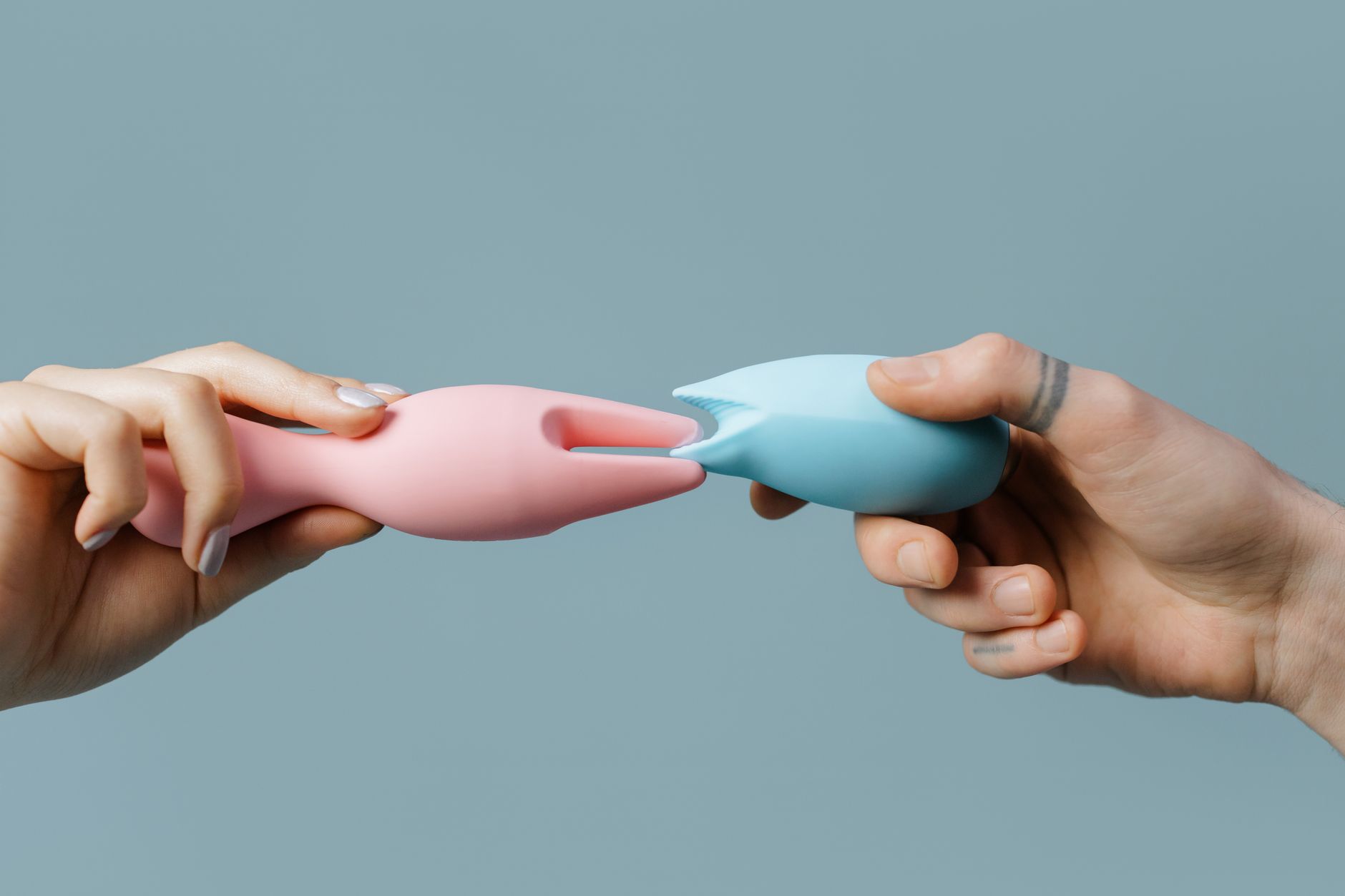
Photo by cottonbro studio on Pexels
The partner conversation this requires
If you're with someone else, they need to understand that your desire isn't random or moody. It's rhythmic. It follows a pattern that exists independent of your feelings about them or the relationship.
That conversation is harder than it sounds because most people have learned to take desire personally. "You don't want me" becomes the translation when really you're in a hormonal window where penetration sounds exhausting and nothing physical sounds urgent. Different thing entirely.
The solution is to separate the two conversations: one about your body's natural rhythm, one about your emotional connection. "My body is in a phase where I want slower or less frequent touch this week" is about biology. "I also want us to stay connected" is about the relationship. Both can be true. Neither means the other isn't real.
If your partner learns your cycle alongside you, they can actually work with it instead of against it. Maybe they initiate more during your ovulation window. Maybe they understand that your quiet week isn't rejection. Maybe they discover they enjoy the variation, because it means sex never becomes completely routine.
What happens if you ignore the cycle
You end up using lemon vibrators and other tools in a way that feels mechanical. You push through low-desire weeks trying to maintain perfect consistency. You feel guilty when you don't want them during the luteal phase. You mistake hormonal shifts for relationship problems.
Over time, you teach yourself that pleasure needs to fit your schedule, not your actual readiness. That's the opposite of building a sustainable sexual life. That's building resentment dressed up as responsibility.
Common cycle-based friction points
One thing I see repeatedly: people assume their low-desire weeks mean something is wrong. With the vibrator. With the partner. With themselves. So they buy more toys, try harder, push further. Then they land in a place where desire feels more fragmented, not less.
What actually helps is rhythm. Permission. Information. When you understand that your desire is supposed to change, the changes stop feeling like problems. They become useful information. Your body is telling you something every single week. The question is whether you're going to listen.
Another friction point: partner mismatch. If your partner's high-desire weeks are your low-desire weeks, the cycle knowledge becomes a tool instead of just more conflict. You see it clearly instead of blaming each other. Then you can actually solve it, or at least name it honestly.
Building lemon vibrator rituals that respect your rhythm
Don't aim for consistency. Aim for attunement. Some weeks your ritual is 20 minutes with your Lem on pattern 5. Other weeks it's five minutes with your hand and very low vibration. Some weeks it's nothing. All of that is successful as long as it matches where you actually are.
I recommend people build two or three tiny rituals, not one. A high-arousal ritual for your peak weeks. A gentle ritual for your follicular phase. A permission-to-rest ritual for your luteal drop. Then each week you use the ritual that fits.
This also takes pressure off. You're not failing because you don't want the same thing every day. You're responding to real changes in your body. That's success.
When to seek support
If your cycle has swung to extremes, where you want intense stimulation five days and literally cannot tolerate any touch the other three weeks, that's worth mentioning to a healthcare provider. Not because it's wrong, but because extreme swings sometimes signal nutritional gaps, thyroid issues, or hormonal imbalances that are treatable.
Also: if your low-desire weeks have started feeling like depression instead of just hormonal dip, that's a conversation for a doctor. Premenstrual dysphoric disorder (PMDD) is real, common, and completely treatable.
But normal cycle variation? That's not a problem. That's just your body doing exactly what it's supposed to do.
FAQ
Does cycle syncing work with all lemon vibrators?
Yes. The principle applies to the Lem, the Lolly, any lemon clitoral vibrator. What changes is the pattern you choose and how long you use it, not the tool itself. Higher-intensity vibrators like the Lem work beautifully at lower patterns during your follicular phase, and at full intensity during ovulation.
What if my cycle is irregular?
Track cervical mucus or basal body temperature for a few months to see if there's an underlying pattern, even if your period isn't regular. Most people find one. If you're on hormonal birth control, the cycle still exists but follows the pill cycle, not the menstrual one. Same principles apply.
Can I sync my cycle with a partner's if we're both women?
Not really. Your cycles won't align no matter what anyone tells you. But you can absolutely track both and plan around them. If one partner is in a high-desire week and the other is in a low-desire week, you have information. That's better than both pretending to want the same thing.
Does my desire during ovulation mean I'm more attracted to my partner?
No. Ovulation hormones increase your body's desire response. That's not about the person. It's about your neurochemistry. If you feel less desire outside that window with a partner you love, the relationship is fine. Your hormones are just doing their job.
What if I notice my cycle desire matches my partner's cycle?
If you live together and have similar timing or similar stress patterns, sometimes your cycles do align slightly. That's not mystical. That's endocrinology meeting proximity. It can actually make things easier because you might want the same intensity at the same time.
Should I talk to my partner about this?
Yes. Be specific. "My body's desire naturally peaks around day 10-12 of my cycle, and I tend to want less during the luteal phase. It's not about you." That conversation stops so much unnecessary hurt.
The real payoff
Once you stop fighting your cycle and start working with it, something shifts. You stop chasing consistency that doesn't exist. You stop feeling broken for not wanting the same thing every day. You start using lemon vibrators and other tools in ways that actually fit your life.
Your pleasure gets to be seasonal. That's not less than consistent pleasure. That's more interesting. That's real.