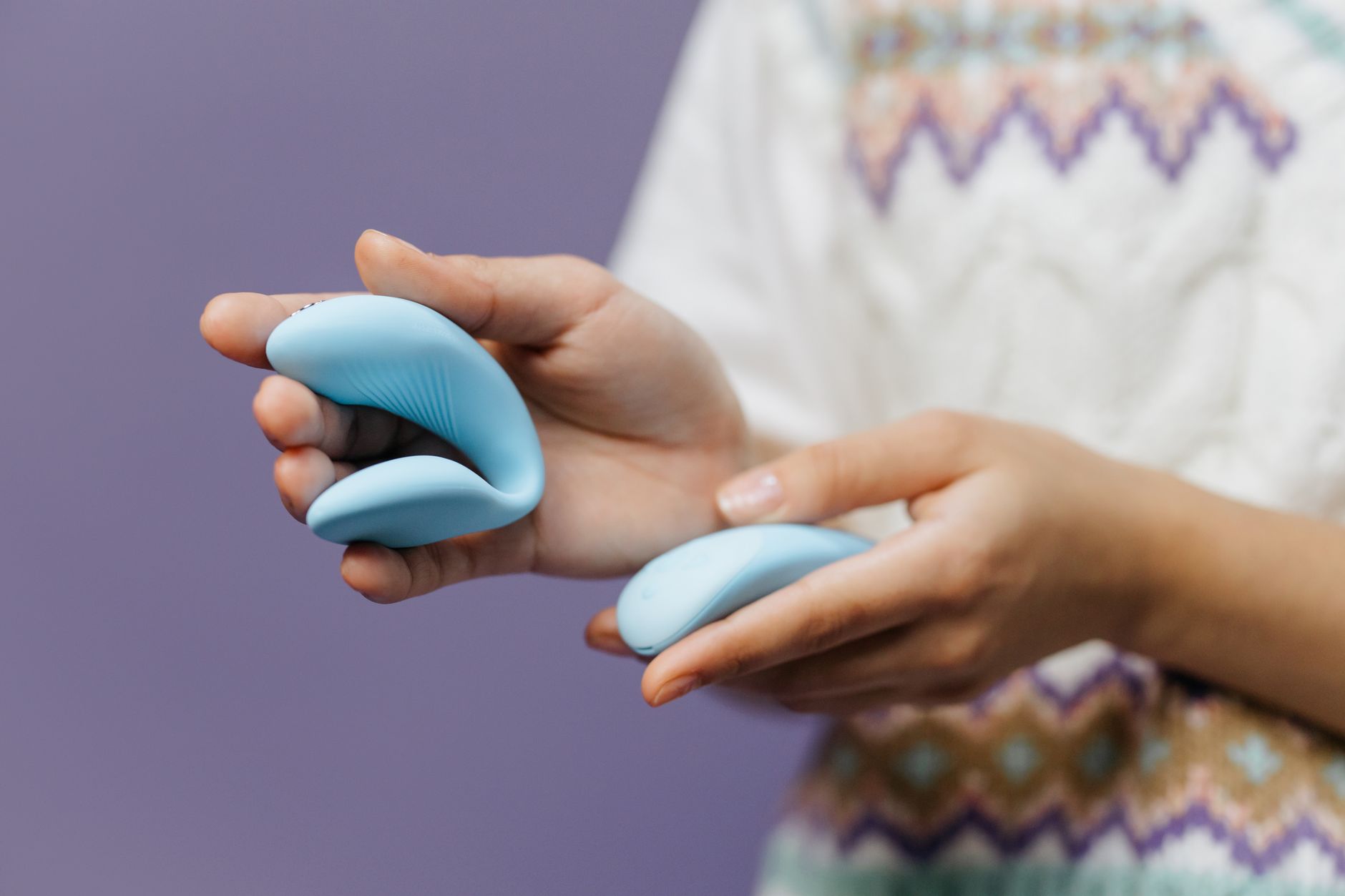
How to Use Lemon Vibrators for Intense Orgasms With a Partner Present
Here's the thing nobody tells you: adding a lemon vibrator to partnered sex is less about the toy and more about permission. Permission to prioritize your own pleasure. Permission to say what you actually want. Permission to come intensely while your partner watches.
Most people skip this because they assume it means one of three things: their partner will feel inadequate, the mood will break, or it'll become mechanical. Sometimes all three. I'm going to walk you through how to navigate each of those, because in my clinical experience, couples who figure this out report deeper satisfaction and closer connection than before.
The permission conversation comes first
You can't add a lemon clitoral vibrator to your sex life if you're not clear about why you want it. And you definitely can't add one if your partner hasn't genuinely agreed.
That conversation doesn't look like "Hey, I want to use a vibrator during sex." It looks like: "I've realized my body needs something different to come consistently, and I'd actually like you there with me when I do it. Not instead of partnered sex. During it. Would that work for you?"
The distinction matters. One version frames the toy as a replacement. The other frames it as an addition. If your partner hears "I need this because you're not enough," everything goes sideways.
Start with why it matters to you, not what you want to buy. "I want to experience more intense orgasms" lands differently than "I found this vibrator." Then ask directly: Are they curious? Skeptical? Worried they'll do something wrong? You need to know what you're actually working with before you introduce any equipment.
Understanding what your partner might be thinking
Some partners feel anxious when a vibrator enters the room. They might worry they're being replaced, or that your pleasure now requires something they can't provide. That's actually fair. Their anxiety deserves acknowledgment.
Here's the paradox: a lemon vibrator doesn't replace a partner. It requires one. You're not having better solo sex. You're having partnered sex that feels better. But your partner needs to understand their role, because it's not passive.
Your partner is watching. They're present. They're involved in the decision about when to use it, how long, what you need from them while it's happening. When it works, it transforms the entire dynamic because it's collaborative in a way that solo play never is.
Positioning matters more than you think
One of the most common mistakes couples make is treating a lemon vibrator like it has to stay in one place. It doesn't. Your partner can hold it. You can hold it. You can switch.
If you're in a position where penetration is happening, a suction-style lemon vibrator at the clitoris means your partner gets to watch your face, control the pressure and patterns, and feel your body respond in real time. That's intimacy most couples never experience.
If you're not doing penetrative sex, a lemon clitoral vibrator becomes the focal point. Your partner can use it, you can use it, or you can take turns. The point is that it's intentional and mutual.
Start with positions where you can see each other. Missionary with the vibrator underneath you. You on top with your partner holding the toy. Lying on your side facing each other. The goal is connection, not just stimulation. If you're facing away, you lose half the benefit.
The intensity conversation is separate from the permission conversation
Lemon suction vibrators come with intensity settings. You need to know what works for you solo before you use it partnered, because your partner shouldn't be responsible for figuring out your equipment during sex.
Spend time with it alone first. Find your favorite pattern. Notice how long you can enjoy each setting before it gets too much. This isn't selfish. This is prep work. When you know exactly what sensation you want, your partner knows what to do.
Then, during partnered sex, you can actually direct them. "Start on pattern two." "A little firmer." "Just here, not the whole area." That kind of specific feedback actually deepens arousal for both people because it's collaborative rather than guesswork.
If you don't know what you want, your partner will default to trial and error. That kills the mood faster than anything.
Timing within partnered sex is its own skill
Introducing a lemon clitoral vibrator mid-sex is different than starting with it. Both work, but they require different setup.
If you start with it, your partner knows from the beginning that this is part of the plan. They watch you build arousal with help from the toy, then shift into penetration or different touch.
If you introduce it partway through, you need to pause slightly and make it intentional. "I want to use the vibrator now." That pause is awkward for about five seconds, then it's fine. Most couples never talk through those five seconds.
What helps: frame the pause as part of the pleasure, not an interruption. You're not stopping sex. You're shifting it. You're saying "here's what I need now," which is hot when it's presented with confidence.
Then notice: does your partner engage with the toy itself, or do they touch you elsewhere? Do they speed up or slow down? Do they watch, or do they close their eyes? Your partner's engagement with the tool will tell you a lot about how comfortable they actually are, which tells you if you need another conversation later.
What to do if it feels awkward (it will, once)
The first time using a lemon vibrator during partnered sex is often awkward. That's not a sign it won't work. That's just the first time.
Awkwardness during sex usually comes from one of three things: the person using the toy is anxious and telegraphing it, the person watching is unsure about their role, or you've both built it up so much in your heads that reality can't compete.
If awkwardness happens, the fix is direct communication afterward, not in the moment. "That felt weird at first, and I want to try again differently." Or: "I realized I was holding tension because I was thinking about how this looked. Can we just focus on sensation next time?"
Your partner might say something like, "I wanted to help more but didn't know how." That's useful information. Now you know to explicitly assign them a role. "Hold it steady while I move against it." Or: "I'll hold it, you just touch me everywhere else."
Most couples need two or three tries before a lemon vibrator feels integrated into their sex life. That's completely normal.
How clitoral vibrators actually change partner dynamics
Here's what happens in my practice when couples successfully integrate a lemon clitoral vibrator into partnered sex: they stop apologizing for needing what they need.
It starts with the vibrator, but it spreads. Suddenly you're more direct about what you want during oral sex. You ask for what you need instead of hoping they'll guess. You stop performing pleasure and start actually experiencing it.
Your partner experiences something different too. They get to witness your body's genuine response without the anxiety of it being entirely their responsibility. That's profoundly relieving for partners who've internalized the pressure to "make" their person come.
Many people report that adding a lemon suction toy to their partnered sex life actually deepened their emotional connection because they stopped being polite about pleasure and started being honest.
The conversation after matters as much as the one before
After you use a lemon vibrator with your partner, check in. Not during the cooldown. The next day.
Ask what felt good, what felt off, what they want to try differently. Listen for what they're not saying. If they say "That was nice" in a flat tone, dig a little. "Did you feel included? Would you want a different role next time?"
For you, notice: Did you feel more pleasure? Did it feel more connected than solo use? Did you enjoy having your partner there, or did they feel extraneous? All of that information helps you refine what you actually want.
The couples who thrive with lemon vibrators aren't the ones where it was instantly perfect. They're the ones who treated it as something to build on together, rather than a tool that either works or doesn't.
FAQ
Should I use a lemon vibrator if my partner has performance anxiety?
Yes, actually. Partners with performance anxiety often feel relieved when a vibrator enters the picture because the pressure shifts. The goal isn't for them to make you come. The goal is partnered pleasure with help from a tool. That distinction can reduce anxiety significantly. Just make sure the conversation is clear that the vibrator isn't there because of anything they're doing wrong.
Can I use a lemon clitoral vibrator during penetration?
Absolutely. Suction-style vibrators work especially well because they stimulate the clitoris without friction that might feel too intense during penetration. The combination often creates sensations neither partner has experienced before. Start with your partner staying still while you get used to the dual sensation, then build from there.
What if my partner wants to use the lemon vibrator on me but I prefer using it myself?
That's completely valid. You can absolutely tell them you want to hold it and direct the pressure yourself. Some people do this for the first few times solo, then gradually invite their partner to take over. Others never pass control. Both are fine. The goal is what feels good to you, not what looks like a movie scene.
Is it weird if we're using a lemon vibrator and I still can't come?
Not weird at all. Some people find that having their partner there actually makes it harder to relax enough to finish, even with a vibrator. If that's you, don't force it. Sometimes the pleasure is the point, not the orgasm. Or sometimes partnered sex with a vibrator is about extended foreplay, and you finish solo afterward. All of those are totally normal.
How do I know if my partner is actually okay with the vibrator or just going along with it?
Watch their engagement without the tool in the picture. If they're less affectionate or less present during other sex after the vibrator enters the picture, that's usually a sign they're tolerating it rather than enjoying it. Have a direct conversation. "I'm noticing things feel different. Is the vibrator something you actually want, or are you doing it for me?" You might be surprised. Some partners need more time to warm up. Others genuinely prefer sex without it, and that's data you need.
Can we use a lemon sucker vibrator if we're in a long-distance relationship?
Not in the way I've described, but you could absolutely do video sex with one. The dynamic is different because you can't physically feel your partner, but being witnessed while using a lemon vibrator can be deeply satisfying. Just make sure both people have agreed to video, and both people are clear about what happens to that recording.
The integration takes time
Using a lemon vibrator during partnered sex isn't something that magically works the first time. It's a skill you build together. You figure out positioning. You learn what rhythm works. You discover what your partner needs to feel included. You get better at asking for what you want.
That process, honestly, is as valuable as the orgasms themselves. Because the couples who figure this out end up with better communication about pleasure in general. They stop assuming. They start asking. They get clearer about what actually feels good and what they've been performing.
Start with the conversation. Get clear on permission and intention. Spend time with a lemon clitoral vibrator on your own first. Then bring it into partnered sex with realistic expectations. You're building something new, not flipping a switch. Give it time, and most couples find that it becomes a natural part of how they make love together.