Let's start with what nobody tells you
Surgery changes your body. Sometimes that's structural. Sometimes it's just the scar tissue, the swelling, or the mental weight of being cut open and stitched back together. Either way, pleasure gets complicated. The temptation is to put it on pause indefinitely, but honestly? Gentle, thoughtful exploration can actually speed up recovery and help you reclaim your sense of self.
Here's what I've learned after working with couples navigating post-surgical intimacy: your clitoris didn't get damaged. Your capacity for pleasure is still there. What changed is access, confidence, and sometimes timing. The right lemon vibrator, used intentionally, can bridge that gap.
Why recovery after surgery affects pleasure
Surgery triggers a cascade of physical and psychological shifts that ripple through sexual response. On the body side, anesthesia takes weeks to fully clear your system. Inflammation suppresses nerve sensitivity. Scar tissue, depending on where it is, can create referred pain or numbness in places that feel unrelated to the surgical site. If your surgery was gynecological, pelvic, or abdominal, the effect is more direct. But even surgery on your knee or shoulder can tank desire because your nervous system is in protect mode.
Then there's the head piece. Your brain spent weeks or months learning to associate your body with pain, catheters, hospital gowns, and loss of control. Flipping that switch back to pleasure takes intention. It's not intuitive. It's not shameful either. It's just the biology of recovery.
The timeline that actually makes sense
Most surgeons say you can resume penetrative sex at six weeks. That's a medical baseline for bleeding and infection risk. But pleasure is a different equation entirely. I tell my clients to think in stages, not dates.
Weeks 1-3: Observation only. You're noticing how your body feels in different positions. Does lying on your side hurt? Does your lower belly feel tender when you laugh? This is data gathering, not deprivation.
Weeks 4-6: If your surgeon cleared you and pain is manageable, you can introduce very gentle external touch. No vibration yet. Just fingers, fingertips, and time. This is where some people find surprising relief. The scar tissue relaxes under slow, consistent attention.
Weeks 7-10: Now a clitoral vibrator enters the picture, but at the lowest setting. Something like the Lem vibrator, which offers precise suction stimulation without aggressive vibration, can feel revelatory here because it doesn't require you to hold intense pressure on sensitive tissue.
Weeks 11+: Once you've had several successful, pain-free sessions, you can gradually explore higher settings and longer sessions.
This is a framework, not a rule. If you're still in significant pain at week six, don't push. If you feel ready at week four, listen to your body and talk to your surgeon.
Why lemon vibrators work better during recovery
Traditional vibrators rely on rapid oscillation. That's excellent for people whose nerve endings are ready for speed. But post-surgical bodies often do better with suction-based clitoral stimulation, which creates a gentle pressure wave rather than a hammering sensation.
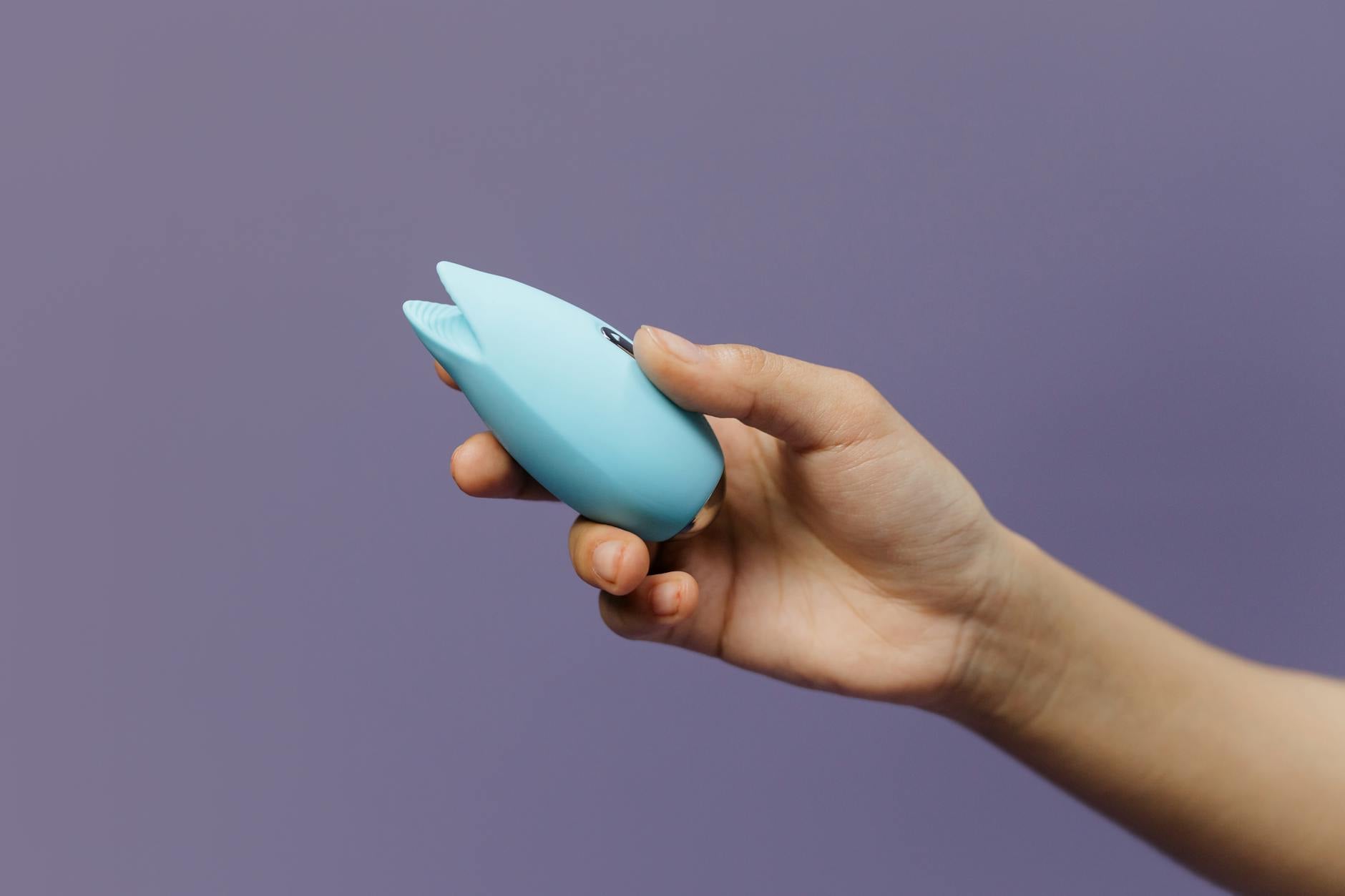
Lemon vibrators, including popular models like the lem suction toys available at My Lemon Toy, work differently. They use pulse-wave technology to create a sensation of gentle sucking. Why does this matter for recovery?
First, suction doesn't require direct tissue contact. If you have surface-level tenderness, you can use the vibrator slightly off-center and still get stimulation. Second, the sensation tends to feel more diffuse, which many post-surgical bodies prefer because it distributes intensity rather than concentrating it on one spot. Third, you have immediate control. The moment it's too much, you lift it off. No gradual wind-down, no intensity creeping up. Just off.
If suction still feels intense, water-based lube becomes your friend. A barrier of lube lets you use the device without direct contact, spreading sensation even wider.
Communication as medicine
If you're partnered, your surgery probably disrupted your sexual relationship in ways you didn't anticipate. Couples often avoid talking about sex during recovery because it feels complicated or vulnerable. Then weeks pass, and the silence starts to feel like rejection on one or both sides.
The single most useful conversation I guide couples through is this one: "When I'm ready to explore pleasure again, here's what will help me feel safe." That might be solo exploration first, with your partner nearby but not touching. It might be a plan where they help you position pillows and then step back. It might be explicit reassurance: "If something hurts, I'm not going to feel rejected." Say it anyway. You both need to hear it.
Many people find that using a lemon clitoral vibrator solo first, before any partnered activity, rebuilds confidence and maps out what feels good. Then you have concrete information to share. "The suction setting on low feels amazing. Anything at medium intensity makes me nervous. I need you to just watch for the first few times." Specificity kills anxiety.
The pain conversation nobody has
Here's the thing about post-surgical sex: a little tenderness is normal. A sharp, stabbing feeling is not. Learn the difference in your own body. Mild discomfort might ease as you warm up. Actual pain means pause and assess.
If penetration was involved in your surgery, you might experience pain at the entry or deeper inside. Gynecological scar tissue can take months to soften. If that's your situation, external-only play with a lemon vibrator lets you explore pleasure without triggering pain. There is zero shame in staying external-only for longer than you expected. None.
Some people also report phantom pain or referred sensation where the surgery wasn't. If you feel weird pinching in your hip when you stimulate your clitoris, that's your nervous system recalibrating. It usually settles with gentle, repeated exposure. But if it doesn't, or if it worsens, tell your doctor. Pelvic floor physical therapy can help rewire those signals.
Rebuilding your pleasure confidence
Surgery often leaves people feeling distant from their own bodies. You've been touched by strangers in clinical ways. You've been helped to the bathroom. Your body became a problem to be solved rather than a source of joy. Reclaiming sensation, especially through solo play, is actually an act of healing.
When you use a lemon vibrator in recovery, you're not just getting off. You're teaching your nervous system that touch can feel good again. You're confirming that your body is on your side. You're proving to yourself that you're not broken. That matters more than the orgasm itself.
Start slow and celebrate small wins. Maybe the first session you just hold the vibrator against your skin at the lowest setting for two minutes and feel nothing. That's fine. The second time you feel a faint tingle. Third time it starts to feel like something. That progression is your nervous system waking up. Honor it.
What to avoid and when
Don't use vibrators if you're still taking heavy pain medication. Painkillers dull sensation, so you might push yourself too hard without realizing it. Wait until you're on minimal or no medication. Don't use vibrators if you're still bleeding from the surgical site, even lightly. That's a sign healing isn't complete. Don't push through sharp pain thinking it will fade. It won't. And don't measure your recovery against anyone else's timeline. Surgery on your neighbor looks the same but feels different in every body.
One more thing: some medications can suppress sensation, similar to what happens with antidepressants or certain blood pressure meds. If you were on new meds during recovery, give yourself extra patience. Sensation might take longer to return than expected. That doesn't mean it won't.
When pleasure becomes part of the healing
About eight weeks in, many of my clients report a shift. Pleasure stops feeling fragile and starts feeling possible. The tight, protective feeling around the scar softens. They realize they haven't thought about the surgery during solo play. That's not a small thing. That's your body reclaiming its own narrative.
If you're in a relationship, this is when you might invite your partner back in. Not because you're "supposed to." Because you actually want to. And you can say specifically what helps. "I want you to watch me first," or "I need you to tell me I'm beautiful," or simply "I want to use my lemon vibrator and then we'll see what happens." Clarity transforms sex from something you're managing through recovery into something you're actually enjoying again.
FAQ
How long after surgery before I can use any vibrator?
Most surgeons clear external play around week 6. But your comfort matters more than the timeline. If you're at week 8 and still having swelling or pain, wait. A lemon vibrator will be even better when your body is actually ready, and you won't spend weeks frustrated that it hurts.
Will using a vibrator after surgery cause complications?
Not if you follow your surgeon's clearance and listen to pain signals. Gentle external play actually promotes blood flow, which supports healing. The risk would be if you used a vibrator before you were cleared or pushed through pain that suggests tissue isn't ready. Stay within the green lights your body gives you.
Can I use lube with my lemon vibrator during recovery?
Absolutely. Water-based lubricant is your friend after surgery. It reduces friction, distributes sensation, and lets you use vibrators more gently. Some people find that lube actually makes early post-surgical play feel possible when direct contact would hurt.
What if my partner wants sex before I feel ready?
This is common and worth addressing directly. You might say: "I need another few weeks before I feel comfortable. In the meantime, I'd like us to stay close in other ways." Many couples find that watching their partner use a vibrator, or vice versa, rebuilds connection and takes pressure off penetrative sex. It's genuinely intimate and totally valid.
Does using a vibrator during recovery speed up healing?
Gentle, consistent stimulation does promote blood flow and can help scar tissue relax. But healing is still a process. Think of vibrator use as part of the picture, not the whole thing. Physical therapy, time, and patience matter equally.
What if I feel nothing at first?
Your nervous system needs time to wake up. That's especially true if you were on strong pain medication. Start with very short sessions, lowest settings, and be patient. Many people don't feel anything for the first few times. Then suddenly sensation floods back. Trust the timeline.
You're not broken. You're rebuilding.
Surgery interrupts pleasure, but it doesn't end it. Using a lemon vibrator thoughtfully as you recover isn't rushing. It's not selfish. It's actually a form of self-care that tells your body and your brain that pleasure is part of healing, not something to postpone indefinitely. Start slow, listen hard, and let yourself feel good again when you're ready. That's the whole plan. If you'd like to talk through your specific situation or timeline, reach out to my team at My Lemon Toy.