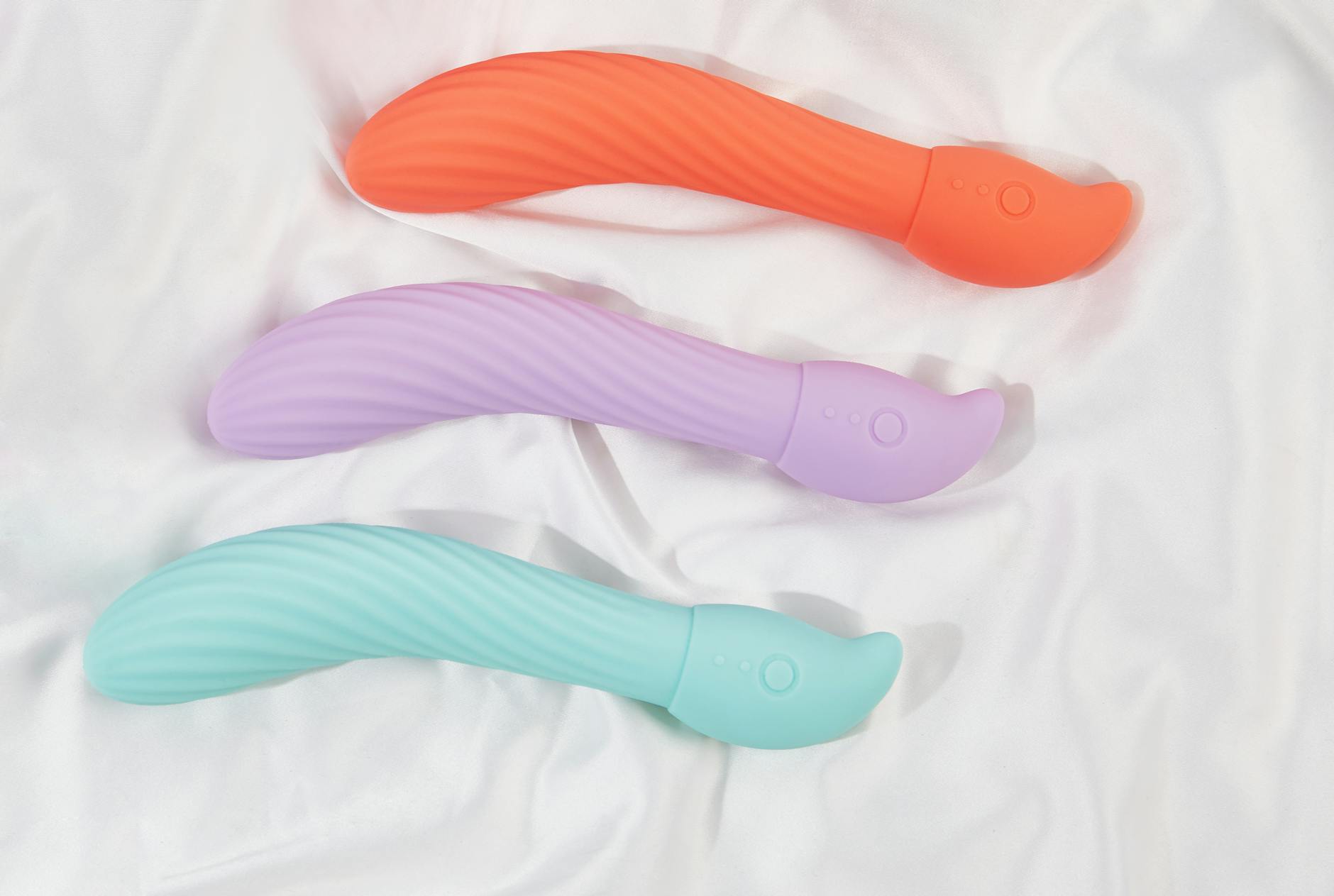
Here's what most people don't realize about pleasure and your cycle
Your body doesn't want the same thing every day. Sensitivity, arousal speed, orgasm intensity, and what feels good to touch shift predictably across your menstrual cycle. Yet almost everyone treats pleasure like a static thing, using the same vibrator at the same intensity no matter where they are in their cycle. That's like wearing the same running shoe whether you're training or recovering from a race.
I've worked with hundreds of people exploring how their cycle influences desire and sensation. The pattern is consistent, measurable, and frankly, game-changing once you start paying attention. A lemon clitoral vibrator, with its broad, gentle suction, is particularly responsive to these shifts because it doesn't demand a single "right" way. You can adjust speed, duration, and approach to match what your body actually needs this week.
Let me walk you through what happens in each phase and how to use your lemon vibrator to work with your body instead of against it.
Menstrual phase: go slow and skip it if you want
This is roughly days 1 to 5. Estrogen and testosterone are both bottoming out. Your clitoris is less engorged than at other times, and direct stimulation can feel uncomfortable or just underwhelming. This is the phase where many people feel least interested in pleasure, and that's totally normal.
If you do want to use a lemon vibrator during your period, here's the approach. Start at the lowest pattern. Don't aim for the clitoris directly. Instead, use the suction on the surrounding area first, letting sensation build gradually. You might find that gentler, longer sessions (12 to 18 minutes) feel better than the intensity you'd use mid-cycle.
Water-based lubricant becomes even more important during your period because hormones are lowest and natural lubrication is minimal. Some people find that orgasm during menstruation actually relieves cramps by releasing pelvic tension, but there's no obligation to pursue pleasure here. It's okay to skip this phase entirely and circle back when your body feels more receptive.
Follicular phase: build intensity gradually
Days 6 to 13 (roughly, timing varies). Estrogen is rising, your clitoris is becoming more sensitive and engorged, and desire typically starts climbing. This is when many people notice they can achieve orgasm more easily and with greater intensity. Your whole body is literally preparing for ovulation.
This is when you can start moving to the middle patterns on your lemon vibrator. Begin at a lower setting and progress over several sessions rather than jumping straight to high intensity. Your clitoris is more responsive, which is good, but it's also still building full arousal. Patience pays off. The warm-up phase might drop from 20 minutes to 12.
One thing I notice: people often try to recreate last month's best orgasm by starting where they finished. That rarely works. Even within the follicular phase, sensitivity shifts day to day. Check in with what feels good today, not what worked last Tuesday.
Ovulation: peak sensation and fastest arousal
Roughly 12 to 16 days into your cycle. Estrogen peaks, testosterone surges (yes, even if you produce less of it overall), and your clitoris is maximally engorged and sensitive. This is the phase where most people report the fastest arousal, most intense sensation, and easiest orgasm.
This is when you can dial higher patterns on your lemon vibrator without worry. You can also shorten your warm-up time significantly. Some people go from zero to orgasm in five minutes during ovulation, while the same approach would feel rushed or too intense in other phases.
One caveat: peak sensitivity can mean that what felt amazing yesterday suddenly feels too much today. Ovulation is a narrow window, usually two or three days. You might notice the intensity sweet spot shifts even within those days. Stay flexible. The lemon vibrator's adjustability means you're never locked into one approach.
This is also when longer sessions and multiple orgasms often feel easiest, if that's something you're interested in. Your body is literally designed to have high sexual response right now.
Luteal phase part one: sustained pleasure and multiple orgasms
Days 17 to 21. Estrogen and testosterone drop after ovulation, but they're still reasonably high, and progesterone is rising. You're in a stable, sensitive phase where pleasure is still accessible but different from ovulation.
Many people find they need slightly longer warm-up in this phase than ovulation, but much shorter than menstrual phase. Your clitoris is still quite responsive. The lemon vibrator patterns you used during ovulation often still work, but you might find you prefer consistency over variation. Some people report that this phase calls for longer, sustained sessions rather than quick bursts.
Orgasms in this phase often have a different quality. Less explosive than ovulation, more sustained and full-body. This is when partnered pleasure often feels most satisfying, if that's part of your life, because the whole experience tends to feel less goal-focused and more connective.
Luteal phase part two: lower arousal, higher effort
Roughly days 22 to 28. Progesterone is peaking, estrogen is tanking, and your body is preparing for menstruation. This is when many people notice arousal gets harder, sensation dulls, and the whole process takes longer.
This is when you might dial back down toward the patterns you used in the follicular phase. Warm-up time stretches again. Your clitoris needs more time to become engorged. Some people find this phase impossible for pleasure and choose to skip it entirely, which is perfectly fine.
Honestly, this is also when a lot of people give up, assuming their body is broken, when really they're just in the wrong phase. The lemon vibrator's suction design helps here because it doesn't require intense sensation or pressure. Broad, gentle suction can sometimes engage nerve endings when direct vibration feels irritating.
If you're interested in maintaining pleasure throughout this phase, patience is your best tool. Give yourself 15 to 25 minutes. Start very gently. Some people find that shifting focus from clitoral stimulation to broader pelvic pleasure (thighs, mons pubis, vulva generally) helps when clitoral sensitivity is lower.
Tracking patterns and what actually shifts
Here's what most people notice shifts across their cycle when they start paying attention:
Warm-up time. Shortest at ovulation, longer in late luteal. Menstrual phase varies widely.
Optimal intensity. Highest mid-cycle, lower at the beginning and end of your cycle.
Number of orgasms. Often easiest in ovulation and early luteal, harder in menstrual and late luteal.
Sensation quality. Explosive at ovulation, diffuse and full-body in early luteal, often absent in late luteal.
Recovery time between sessions. Shorter mid-cycle, longer at other times.
None of this is universal. Your cycle will be your own. What matters is starting to notice the pattern instead of assuming your pleasure should be consistent regardless of hormones. It shouldn't be. It's designed to shift.
How to actually start tracking
I recommend a simple system: note the date, your cycle day, which lemon vibrator patterns felt best, how long warm-up took, whether you had an orgasm, and how it felt. You don't need an app. A notes document works fine. After two or three cycles, patterns emerge. You'll notice the specific window when high intensity works, when you need longer sessions, when you might want to skip pleasure altogether.
There's something powerful about realizing your body isn't inconsistent. It's responsive. And once you know that, using a lemon vibrator doesn't feel like troubleshooting a broken machine. It feels like collaboration with your own biology.
The broader permission this gives you
Cycle syncing isn't about rigid rules. It's about permission. Permission to want different things at different times. Permission to need more time sometimes. Permission to stop pursuing pleasure when your body isn't interested and know you're not broken, just in a different phase.
Having this frame also takes pressure off partnerships. If you understand your cycle, you can communicate it clearly: "I'm in my luteal phase, so I need more warm-up time and lower intensity." That's factual. That's not a rejection. That's information that actually helps a partner support your pleasure instead of guessing.
The lemon clitoral vibrator is particularly useful for this kind of cycling approach because its broad suction doesn't demand the same kind of physical setup every time. You can use it gently for extended sessions. You can use it intensely for quick ones. You can use it on different parts of your vulva. The same tool adapts to what you need this week.
Once you start syncing your approach to your cycle, the thing most people report is relief. Not every phase feels the same because they're not supposed to. Your body isn't failing you. It's telling you what it needs. The only difference is now you're listening.
FAQ
Can you use a lemon vibrator when you're on your period?
Yes. Some people find it helpful for cramp relief due to pelvic floor release. Others prefer to skip pleasure during menstruation. Both are fine. If you do use a lemon clitoral vibrator during your period, start at the lowest pattern, use plenty of water-based lubricant, and avoid direct clitoral contact if it feels sensitive. Many people find that gentler, longer sessions feel better than intense ones during this phase.
Which cycle phase gives the best orgasms?
Ovulation (around day 14) typically produces the fastest, most intense orgasms for most people because estrogen and testosterone are both high. That said, "best" is subjective. Some people prefer the sustained, full-body quality of early luteal orgasms over the explosive feel of ovulation. Track your own cycle and you'll see your personal preference emerge.
Do hormonal birth control pills change how I should use a lemon vibrator?
Yes, significantly. Hormonal birth control suppresses the natural hormonal fluctuations that drive cycle-based pleasure changes. If you're on hormonal BC, you likely won't see the dramatic shifts described here. Your baseline arousal, sensitivity, and orgasm quality stay relatively constant. For you, consistency in your lemon vibrator approach usually works better than cycling adjustments.
What if I track my cycle but don't see clear patterns?
That's genuinely normal. Not everyone has predictable cycle-driven pleasure changes. Stress, sleep, relationship factors, and medication all override hormones. If you don't notice clear patterns after two or three cycles, you might be someone for whom cycle syncing doesn't apply. That's not a failure. It just means your pleasure isn't primarily hormone-driven.
Can you use a lemon vibrator during the luteal phase if arousal is really low?
Absolutely. Arousal being low doesn't mean pleasure isn't available, just that it requires more setup. Extend your warm-up time to 15 to 25 minutes, use a lemon clitoral vibrator on the lower patterns, and consider focusing on broader vulval sensation rather than clitoral stimulation directly. Some people also find that partnered touch or fantasy helps in this phase more than in others. Experiment.
Does cycle syncing work if you have an irregular cycle?
It depends on how irregular. If your cycle length varies by a week or two but follows a pattern, you can still track. If your cycle is highly unpredictable, the framework becomes less useful. Stress, PCOS, and thyroid issues all create irregular patterns. In those cases, tracking pleasure itself (what intensity feels good today) matters more than predicting based on cycle day.
Should partners know about your cycle phases when using a lemon vibrator together?
It really helps. If your partner understands that you need different approaches at different times in your cycle, they can support rather than assume. You might want to say something like, "I'm in my luteal phase, so I need more warm-up time and gentler sensation today." That's clear, collaborative, and removes the guesswork. Communication about pleasure across cycle phases deepens trust.
What happens when you actually pay attention
The goal isn't perfection or hitting some optimal orgasm in every phase. It's noticing. Once you start tracking how your clitoris, arousal, and sensation shift throughout your cycle, you stop blaming yourself for inconsistency. Your body isn't broken. It's seasonal. And a lemon vibrator with adjustable patterns becomes the tool that helps you work with that seasonality instead of fighting it.
Your cycle knowledge plus a responsive vibrator is a genuinely powerful combination. You've got this.