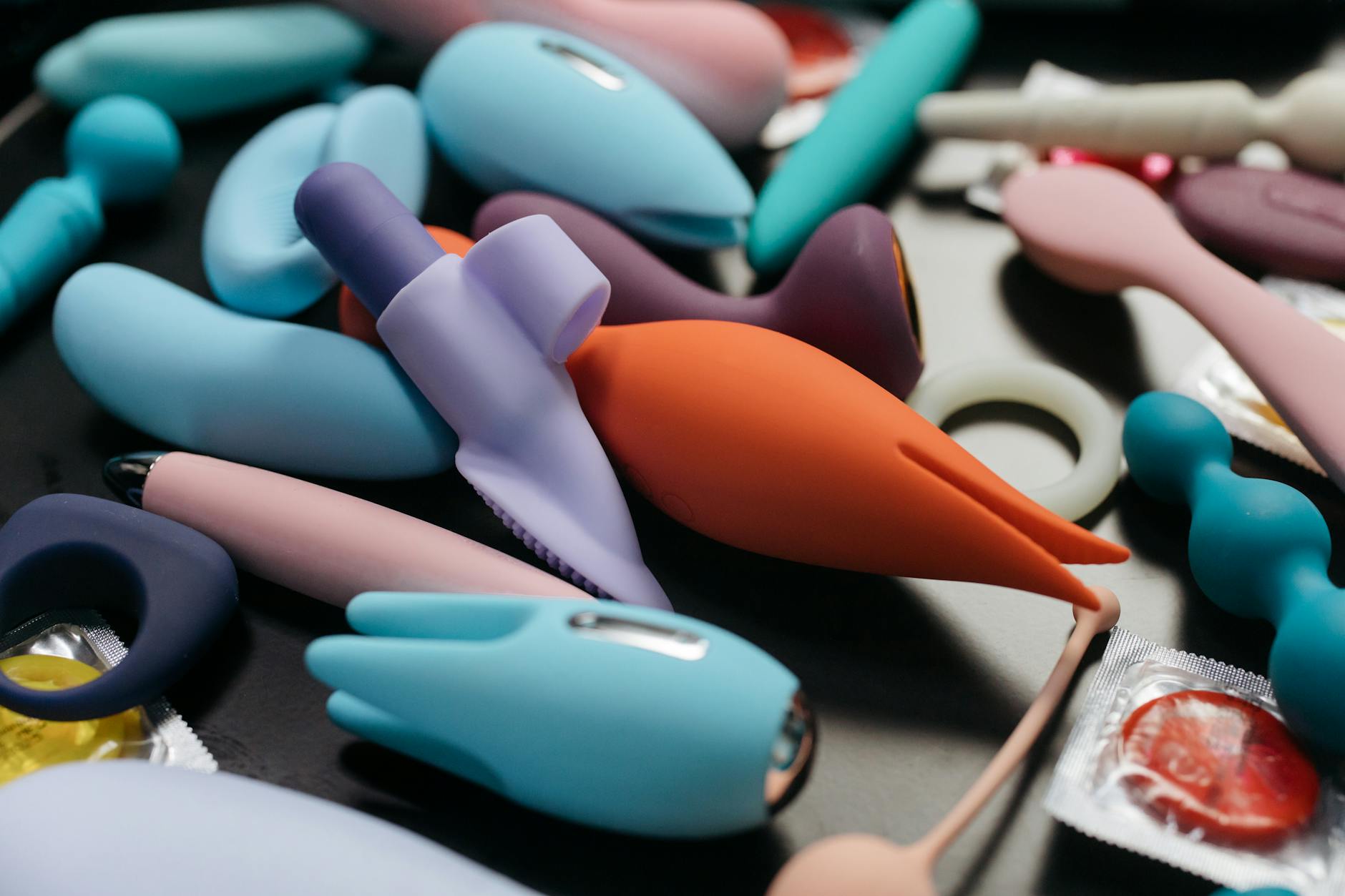
How to Rebuild Intimacy After Extended Stress With Lemon Vibrators
The honesty first
You know this already: stress kills sex. Work implodes, someone gets sick, a family crisis lands, the house falls apart, childcare breaks down, money gets tight. Suddenly intimacy is the thing you both postpone. Then weeks become months. Then you're looking at your partner across the dinner table thinking, "When did we last touch each other?"
The weird part is that you don't stop loving each other. You just stop reaching.
Here's what I see clinically: couples don't rebuild intimacy by having "the talk" about reconnection. They rebuild it by restarting it. Physically. Small. With permission to be awkward about it.
Why stress specifically breaks the physical connection
Stress floods your body with cortisol and adrenaline. Both are useful if you're fleeing danger. Neither helps you feel desire. Over weeks or months of stress, your nervous system gets stuck in fight-or-flight mode. You're scanning for problems, not attuned to sensation. Your partner is doing the same.
Then there's the shame layer. "We should have had sex by now." "I should want this more." "They probably think I don't find them attractive anymore." These thoughts are so common I could set my watch by them. And they're usually completely wrong. But they sit between you like furniture you can't move.
The third thing that happens is that sex feels like it has to mean something now. Because you haven't done it in so long, the first time back feels like it should be perfect. Should be reconnecting. Should fix things. That's a lot of pressure. Most couples report that the anticipation of sex after a long gap is actually more stressful than the stress that caused the gap in the first place.
The restart strategy that actually works
Here's what I recommend to couples rebuilding:
Start not with sex, but with touch. Scheduled, intentional, low-pressure touch.
If you haven't been intimate in months, don't jump to intercourse. Start with ten minutes of stroking each other's arms, backs, shoulders. Skin on skin. No goal. No finish line. One person touches, the other receives. Then you swap. That's the whole date. You get dressed after.
Do that twice. Yes, just twice. Let your nervous system remember what safety and attention feel like.
Then in week two, add genital touch into that same framework. Still no goal. Still no pressure to orgasm. You're teaching your body that pleasure is back on the table.
Where a lemon vibrator enters the equation
Here's the thing about toys during a reconnection phase: they take pressure off both of you.
If you haven't had sex in months, there's often an invisible scoreboard. "Will I be able to finish?" "Will I want it as much as they do?" "What if I can't orgasm?" A clitoral vibrator removes those questions. You're not trying to prove anything. You're just exploring sensation together.
I often suggest that one partner uses a lemon vibrator while the other watches, touches, or uses their hands elsewhere. This is radically de-pressurizing. You're not performing. You're just present.
Lemon vibrators are particularly useful here because they're designed for suction and air-pulse stimulation rather than direct penetration. That means:
- Less intensity early on, if you've been disconnected from sensation for a while
- More precision if direct touch feels overwhelming
- A focal point for attention that reduces the mental noise of "Am I doing this right?"
The four-week arc that works
Week 1-2: Touch without agenda. Ten minutes, clothed or partially clothed, stroking. No climax expected. You're rewiring the association between touch and safety.
Week 3: Add sensation. Bring a lemon clitoral vibrator into the bedroom. One partner uses it alone while the other is present, touching elsewhere. No performance. Just rediscovery.
Week 4: Shared exploration. Both of you touch each other while one person uses the vibrator. Let it be playful. Laughing is fine. Awkwardness is normal.
Week 5+: Whatever feels good. Now that your nervous systems have remembered that pleasure is possible, you can move into whatever intimacy looks like for you both.
This timeline isn't rigid. Some couples move faster. Some need more time in week 2. The point is that you're building in stages, not jumping from months of nothing to full sex and expecting it to work.
The conversation you actually need to have
Before you do any of this, talk to your partner. Not a deep conversation. Just: "I miss you. I miss us. I want to try something small to get us back on track. Can we try?"
If they say yes, great. If they're hesitant, find out why. Is it shame? Are they worried about performance? Are they scared it will feel awkward? All of those are real and valid. Name them. Then you can work with them.
If they're not interested in toys, that's also fine. The touch framework works without them. But I've found that when couples are rebuilding after stress, having a neutral third thing in the room (like a lemon vibrator) actually makes the conversation less charged. It's not about you failing each other. It's about you both trying something new together.
Why lemon sexual toys work for this specific situation
Lemon adult toys, especially the Lem vibrator, are designed to deliver consistent stimulation without requiring you to build up to high intensity. They're precise. They're intuitive. They're small enough that they don't take up emotional space in the room. And they work well for people whose bodies have been in stress mode for months, because you can start at a low pattern and work up.
I also recommend them specifically because they're beautiful. Sounds weird, but it matters. If you're rebuilding intimacy, having a toy that's visually appealing makes it feel less clinical. Less like a problem you're solving. More like something you're exploring together.
The thing nobody says
After months of no sex, the first time back might not be orgasmic. You might not finish. You might start and stop. You might laugh, or feel awkward, or suddenly get emotional because you realize how much you've missed this.
All of that is success.
Intimacy isn't one event. It's a pattern you build. Week one is awkward. Week two gets easier. By week four, you're actually remembering why you liked each other's bodies in the first place. That's when the real reconnection happens.
The aftermath
Once you've restarted, you get to choose what intimacy looks like going forward. Maybe you use lemon vibrators regularly. Maybe you use them once in a while. Maybe you've remembered that you actually prefer penetration, or manual touch, or something else entirely. That's not the point. The point is that you've proven to each other that you can come back from months of nothing and build something together.
Stress will come again. It always does. But you'll know now that you can restart. That's the real gift.
FAQ
What if my partner thinks toys are weird or unfaithful?
That's a common worry, and it's worth exploring. For many people, toys feel threatening because they think they're being replaced. Start with curiosity rather than defensiveness: "I'm wondering if you'd be open to trying something together. Not instead of me. With me." Frame it as exploration, not substitution. If they're still resistant, go back to touch without toys. The framework works either way.
How long should I wait before trying penetrative sex again?
I generally recommend waiting until you've had at least two or three sessions where you've both felt pleasure and presence. That usually takes two to three weeks. The goal is to make sure your nervous systems have actually relaxed, not just that you've checked off boxes.
What if one of us finishes way before the other?
Perfect. That's totally normal and actually useful information. If you're rebuilding, knowing that you have different timings is helpful. You can then adjust: maybe they use a lemon clitoral vibrator while you continue. Maybe you take turns. The point is that you're no longer performing for each other, you're just present.
Is it okay to use a vibrator during partnered sex?
Yes, absolutely. Many couples find that adding a clitoral vibrator during penetration actually helps rebuild connection because it removes the pressure on one person to "make it happen." You're working together toward the same goal, rather than one person trying to deliver sensation.
What if we still feel disconnected after four weeks?
That's real information too. It might mean you need more time. Or it might mean that stress isn't the only thing that broke the connection. If you've genuinely tried the touch progression and it's still not working, consider talking to a couples therapist. Sometimes intimacy issues point to something deeper that needs professional support.
Can I rebuild intimacy after stress without toys?
Completely. The touch framework works on its own. Toys just make it easier by removing some of the performance pressure. But skin-to-skin contact, intentional time together, and conversation will also get you there. Use toys if they feel right. Skip them if they don't.
The real work
Rebuilding intimacy after stress isn't about finding the right vibrator or following the right timeline. It's about deciding together that you want to. Then showing up, awkwardly, and trying. The lemon vibrator is just the permission slip. The real reconnection is the two of you deciding that you're worth the time.
If you want personalized guidance on rebuilding intimacy with your partner, reach out to Hello Nancy. We're here to help you navigate the messy middle of long-term relationships.