
Here's what nobody tells you about arousal timing
One of you is mentally undressing your partner by the time you close the bedroom door. The other is still mentally reviewing tomorrow's grocery list. This isn't a personality flaw. It's neurology, and it's wildly common. Around 40% of couples report some version of arousal mismatch, where one partner's body wakes up significantly faster than the other's.
The silent part that costs relationships is this: when it happens repeatedly, the faster partner starts to feel rejection. The slower partner feels pressure. Both start to resent the dynamic. And then sex becomes something you schedule around rather than something you actually want.
Lemon vibrators aren't a band-aid. They're a way to stop the resentment from building in the first place.
Why arousal takes different amounts of time
Your partner isn't dragging their feet on purpose. What's actually happening is neurological. The sympathetic nervous system (the one that keeps you alert and task-focused during the day) takes longer to downshift in some people than others. Testosterone levels vary. Blood flow patterns differ. Some bodies are wired to respond to touch right away. Others need mental transition time first.
Hormones matter too. If your partner takes hormonal birth control, antidepressants, or is managing stress or thyroid issues, arousal can legitimately take longer. Age plays a role. Relationship length plays a role. How much stress you're both carrying plays a role.
The neurological reality: you can't argue someone into being ready faster. You can only work with what's actually happening in their body.
The tension this creates
When timing mismatches go unaddressed, couples usually slide into one of three patterns. First, the faster partner starts initiating less because rejection (even mild delay) stings. Second, the slower partner feels guilty about their body's pace and either fakes readiness or avoids intimacy altogether. Third, both of you stop enjoying the experience because it's become logistically complicated.
I've worked with couples who've been together 15 years and haven't touched in months because the logistics of "waiting" felt too fraught. Not because they stopped loving each other. Because the arousal mismatch became something they had to solve, which made it feel like a problem instead of an opportunity.
How lemon clitoral vibrators shift the dynamic
Here's what changes: instead of one person waiting passively while the other builds up to readiness, both of you have something to do. The slower partner can use a lemon vibrator while the faster partner is already engaged. The faster partner doesn't feel rejected. The slower partner doesn't feel pressured. And because lemon vibrators work through suction rather than traditional vibration, they actually accelerate arousal by stimulating the clitoris differently than hands or other toys.
This is the part couples don't expect: when the slower partner gets direct stimulation from a lemon clitoral vibrator, their arousal often catches up faster than either of you anticipated. The suction mechanism engages nerve endings in a way that bypasses the usual slow-build pattern. You're not waiting anymore. You're synchronized.
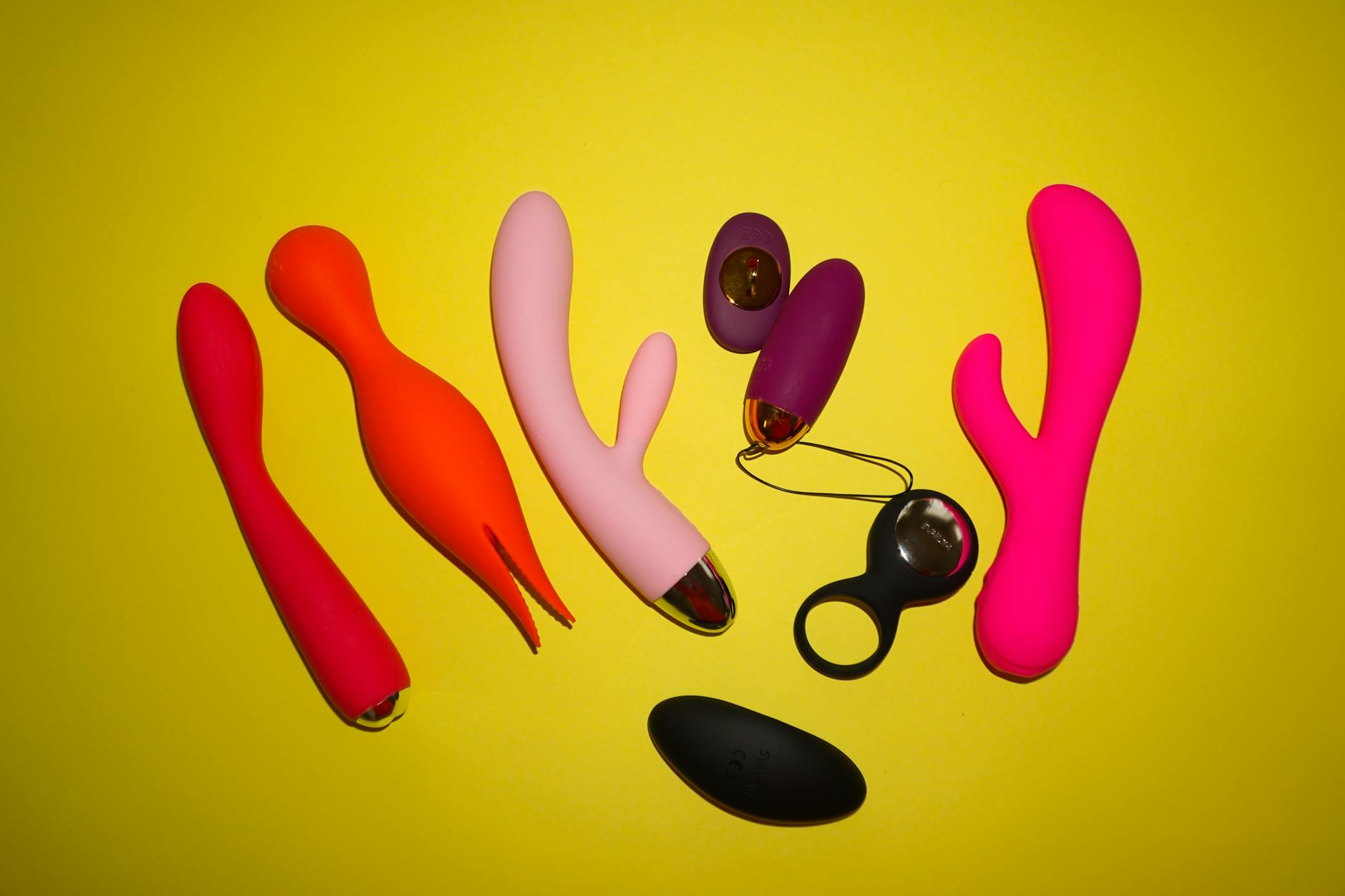
Photo by FounderTips on Pexels
The practical choreography
Let's say you and your partner are about to become intimate. The faster partner gets comfortable. The slower partner reaches for a lemon vibrator. Both of you are now actively engaged in foreplay at the same time, rather than one person performing while the other receives.
Start at a lower pattern. The goal isn't to race toward orgasm. It's to shift the nervous system from sympathetic (alert, task-focused) to parasympathetic (relaxed, receptive). For many people, that takes 5 to 10 minutes with consistent stimulation. With a lemon clitoral vibrator, those 5 to 10 minutes feel shared rather than obligatory.
The rhythm matters more than intensity. One of the most common mistakes couples make is assuming that faster or stronger vibration will speed up arousal. Usually the opposite is true. A steady, medium-intensity pattern allows the nervous system to transition without getting stuck in the sympathetic overdrive that comes with performance pressure.
Talking about it beforehand (the thing that actually matters)
Introducing a lemon vibrator into your dynamic doesn't work if you're using it to avoid the conversation. You have to actually name what's happening: "I notice our bodies wake up at different speeds. That's completely normal. I'm not feeling rejected. I just want us both to feel good at the same time. I think a lemon vibrator could help us sync up."
The slower partner's job is to be honest about what they need to get there. More foreplay? Mental transition time before you get into the bedroom? Less external pressure? A particular kind of touch or conversation? The faster partner's job is to listen without making it mean something about their attractiveness.
When I work with couples on this, the conversation itself is often more valuable than the toy. But the toy gives you something to do while you're bridging that gap. And honestly, after a few experiences where you actually do sync up, both of you start approaching sex differently. The resentment softens because the dynamic has actually changed.
When to use it and when not to
Lemon vibrators aren't a solve-all. If your arousal mismatch is rooted in deeper relationship tension, unresolved anger, or a significant shift in attraction, a toy isn't going to fix that. Those conversations need to happen with a therapist or a trusted relationship counselor.
But if the mismatch is purely physiological, if both of you want to be intimate and just need your bodies to cooperate, lemon clitoral vibrators absolutely bridge that gap. They give both of you permission to be present in foreplay at the same time. They make the slower partner feel like an active participant rather than an obstacle to manage. And they often mean better orgasms for both of you, because the arousal is actually mutual.
One thing I always tell couples: if you're going to introduce this into your dynamic, pick a moment when you're both relaxed and there's no pressure to perform. Maybe it's a weekend morning. Maybe it's when you're feeling particularly connected. The first time you use a lemon vibrator together shouldn't feel like you're troubleshooting a problem. It should feel like you're experimenting with something that might actually feel better.
The longer conversation underneath
Arousal mismatch sometimes points to something deeper: how you're distributing emotional labor, whether both of you feel equally invested in the relationship, or whether one partner is carrying stress that the other isn't aware of. If the slower arousal is new, or if it correlates with other relationship shifts, that's worth paying attention to.
But most of the time, arousal speed is just anatomy. And when you stop fighting your anatomy and start working with it, intimacy gets easier. A lemon vibrator is just the tool that makes that possible.
Frequently asked questions
Can a lemon vibrator work for both partners at the same time?
Yes. One partner uses the lemon clitoral vibrator for their own stimulation while the other engages in foreplay or penetration. You're both active in the experience rather than one person waiting passively. Some couples also take turns if they both enjoy clitoral stimulation, though most find it works best when the slower-to-arouse partner uses it.
How long does it usually take for arousal to sync when using a lemon vibrator?
This varies, but most people find that 8 to 15 minutes of consistent stimulation with a lemon sucker gets their body to a place where arousal feels mutual. The key is consistency, not intensity. A medium pattern works better than high for most couples because it keeps you in the relaxed part of your nervous system.
Will using a lemon clitoral vibrator make my partner feel like I don't want them anymore?
Only if you frame it that way. If the conversation is "I want us to feel good at the same time" rather than "You're taking too long," most partners feel closer afterward, not rejected. The toy is a bridge, not a replacement.
What if my partner is uncomfortable with toys in the bedroom?
Start with the conversation, not the toy. Explain what you're trying to solve and why. Some partners worry that toys mean they're not enough. That's worth addressing directly: a toy doesn't replace a partner. It's a tool that helps both of your bodies cooperate. If your partner remains uncomfortable, that's important information about what they need from you to feel secure in intimacy.
Do lemon vibrators actually speed up arousal or just feel good?
Both. The suction mechanism stimulates nerve endings in a way that genuinely accelerates arousal for most people. But the psychological piece matters too: when both of you are engaged at the same time, there's less performance pressure, which actually helps arousal happen faster. It's both the physiology and the permission.
How do I bring this up without it feeling like I'm criticizing how my partner's body works?
Frame it as a shared experiment, not a problem you're solving. "I love how our bodies work differently. I want to see if there's a way we could sync up that feels good for both of us. I found something I want to try together." That lands differently than "You take too long."
The real thing nobody talks about
Couples who successfully navigate arousal mismatch often end up feeling closer afterward, not more distant. Because you stopped hiding the mismatch and started actually addressing it. You had a conversation about what your bodies need. You got curious about each other's pace instead of resenting it. And you found a tool that makes sex feel collaborative instead of like a coordination problem.
That's what lemon vibrators do for couples with different arousal speeds. They turn a timing issue into an invitation to know each other better. If you want to explore this more deeply, or if arousal mismatch is tangled up with other relationship concerns, reach out. I'm here to help couples build intimacy that actually works for both bodies in the room.
Sources
- Basson, R. (2000). "The female sexual response: A different model." Journal of Sex & Marital Therapy, 26(1), 51-65.
- Meston, C. M., & Frohlich, P. F. (2000). "The neurobiology of sexual function." Archives of General Psychiatry, 57(11), 1012-1030.
- Zeifman, R. J., & Karama, S. (2021). "Differences in neural activation patterns during sexual arousal between men and women." Current Sexual Health Reports, 13(1), 4.
- Levine, S. B. (2003). "The nature of sexual desire disorders in men." Journal of Sex & Marital Therapy, 29(5), 347-362.